




The Days of Noah

(Genesis 6; 2 Peter 2:4-10a)

One thing you’ll find, if you spend a lot of time reading the literature of the ancient world, is that a lot of that literature focuses on stories of giant heroes, men who were incredible warriors and leaders because they were simply more gifted than the normal run of humanity—especially physically, as they were usually tall, powerful, and athletic. Don’t think Shaq, think a guy who could bench-press Shaq and then dunk him for good measure. The Babylonians had the story of Gilgamesh—which, by the way, includes a flood story. The Irish sang of Fionn mac Cumhaill and Cúchulainn. The British gave the world the epic of Beowulf, who killed the monster Grendel in single combat. And of course, the Greeks told tale after tale of demigods and other heroes, from brutal Hercules to crafty Odysseus, as well as the legend of the great city of Atlantis, lost beneath the waves.

Now, your professional academic skeptics will tell you that these are all myths, and the first thing they’ll mean by that is “complete inventions”; but I’m not so sure. I won’t say that I believe a one of these stories happened exactly as we have them, but in my experience, stories don’t come from nothing, either; and the fact that we find these sorts of stories in so many different human societies—and not just on the European continent, either, though they do take on some different forms when you get to, say, Africa, or the Americas—well, it seems to me that suggests that there’s a kernel of memory lurking there in the back of the mind, that then works its way out in stories that are particular to each society and culture.

One of the things that makes me think so is that the Bible, too, knows of the existence of these heroes of old, these men of renown—but as is so often the case, it has a rather more skeptical take on them than the rest of the world. Part of this is that those heroes of old were such violent people as a whole; for all the complaints from some quarters about all the wars in the Old Testament and all the times God commands the Israelites to utterly defeat another nation in judgment for their idolatry, the Bible nowhere celebrates war, it has no long passages offering lovingly-detailed descriptions of battle, and it never glorifies warriors for their feats of arms. War is certainly presented as a necessity in many places in the Old Testament, but there is no trace of the theme common in other societies that the purpose of life was to win glory and the way to do so was through valor in combat. That’s a big, big difference between the Scriptures and, say, the Tain, the account of Cúchulainn and the great Ulster cattle raid.

So where does that idea come from? From human sin, with a little help. Look first at the way these heroes of old are labeled in verse 4: they’re called the Nephilim, the “fallen ones.” Then look where they came from: “The sons of God saw that the daughters of men were beautiful, and they married any of them they chose.” What that means is much disputed, but for the best explanation I’ve found, let me tell you a little story. As we talked about last week, God showed Cain grace after Cain murdered his brother, and Cain went off into the land of Nod, and over time, a society developed there; and from what we see of it in chapter 4, it suggests that Cain did not use God’s grace well, for it was a society ruled by brutal and vindictive people. After all, force can be a very effective way to gain power over others; it can be countered by more peaceful means, but doing so requires a lot of people, and there just weren’t that many around back then. These tyrants were very much in rebellion against God, and they just kept getting worse, to the point that their evil offered an opportunity for evil spirits to possess them and take over. The “sons of God” in verse 2 are clearly human, but just as clearly they’re more than merely human; they are, I believe, demon-possessed rulers, fallen ones in their own right, who had children of unnatural physical presence, power, and ability—the heroes of old.

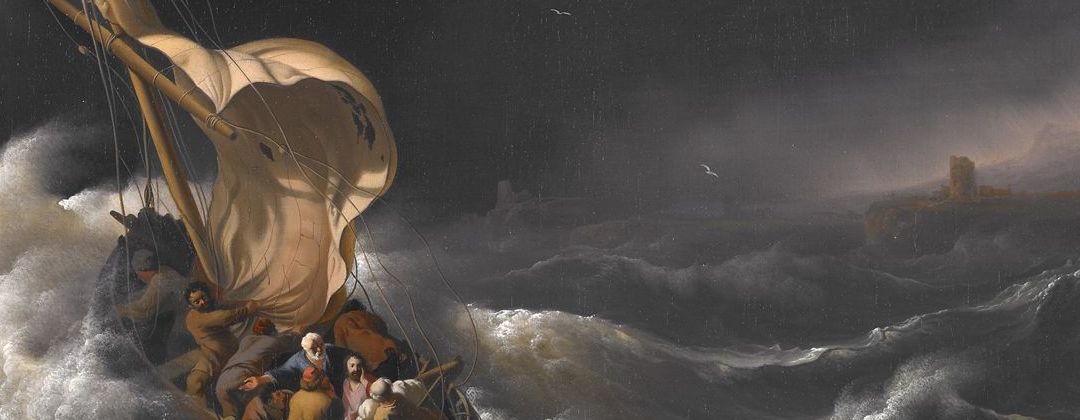
This created a dire situation for the future of the human race. These tyrants weren’t the only people on earth, but there was no one capable of resisting them; imagine how World War II would have turned out if the Nazis had had the only modern military on the planet, and you have an idea how this must have looked. Drastic measures were necessary to redress the balance, and the only one around to take those measures was God—and God will not allow human sin, injustice and violence to flourish unchecked. Sooner or later, he will bring down the hammer of his judgment on the unrighteous; and so he did. He raised up Noah, and he said to Noah, “Human society is so corrupt and so violent, it’s beyond repair; so I’m going to wipe it out. I’m going to send a great flood, and that will be the end of it. But you have been faithful to me, so I’m going to be faithful to you; I’m going to preserve you and your family. Build a giant boat and fill it with every kind of animal and every kind of food, and I will save you in the midst of the flood.”

Verse 22 tells us that Noah did everything God told him. All it gives us is that bare statement, but there has to have been a lot more to it than that; for starters, it has to have been a hard sell to his wife, trying to convince her that he hadn’t just gone stark raving mad. There was simply no logical reason for him to build a boat that big, and the reason he was offering—namely, God told him to—doesn’t always sound very logical. Building the ark was one of the biggest acts of faith in human history—but Noah did it. He must have put up with a lot of mockery for doing it, since we see in verse 3 that God decided to give humanity 120 years’ grace between his decision to send the flood and the time when he actually did so; Noah must have thought at times that converting the thing into a restaurant would make more sense than hanging around waiting for something he’d never seen before to happen. But he obeyed anyway, trusting that God was about something more than just making a fool of him; and so he and his family were saved.

And you know, they couldn’t have been saved any other way. There simply were no other options. There never are, really, as 2 Peter points out, but we usually like to think there are; we would rather believe that we’re in control, that it’s in our own power to save ourselves. Under normal conditions, we can usually convince ourselves that’s true. And then a crisis comes, and suddenly, we’re out of our depth, and we know it; or we reach a point when the consequences of our own wrongdoing and our own failures come back on us, when we know we’re getting what we’ve earned, and we understand just how far beyond our ability it is to save ourselves. And sometimes, the two are one and the same, as we face a disaster of our own making, and all we can do is cry out for mercy, pleading for a salvation we do not deserve and cannot possibly make happen by our own efforts.

And the amazing thing is, when we do, God responds; he doesn’t always shield us from the consequences of our sin, but he saves us through them. He didn’t give up on the human race, even when violence and corruption were everywhere; he found the one faithful family through whom he could rebuild, and he saved them. And he doesn’t give up on us, either; no matter what we may have done, no matter how deep the flood waters may be in our lives, if we turn to him and cry out for help, he will lift us out. We can’t save ourselves, we can’t get free of the power of sin in our lives—not by our own strength; but he knows that, and so he did it for us. He sent us his Son, Jesus Christ, to do for us by his death and resurrection what we could not do for ourselves; Jesus paid the penalty for all our sin by accepting his judicial murder, being put to death on a cross, and he shattered the power of sin and death in our lives by rising again from the dead.

He has purchased our salvation, and he offers it to us as a free gift; we don’t have to work to earn it. That’s not to say it won’t change us; it will. That’s not to say that he won’t give us work to do; he will. After all, when he offered Noah and his family salvation from the flood, he still left it up to them to build the boat—he didn’t build it for them. In truth, the work he gives us is part of the blessing. But it is to say that we don’t have to earn his love, or his attention; we don’t have to earn the right to be saved. All we have to do is receive the gift.

The most critical health care reform

even ahead of tort reform, I think, is the simplest: cost transparency. As Barbara Kiviat writes,

A big part of the reason consumer goods are so cheap in the U.S. is because people always know what they’re paying. As a consequence, consumers can push prices lower by voting with their feet. If CVS tries to sell me a toothbrush for $4 when the one at Rite Aid goes for $3, I will shop at Rite Aid and CVS will learn its lesson. This dynamic almost entirely accounts for the success of Wal-Mart. Yes, Wal-Mart has more efficient (and therefore cheaper) distribution than almost any other company on Earth, but the whole reason Wal-Mart is going for cheap in the first place is because there are hundreds of millions of Americans who demand it—a demand that is listened to because people are able to make well-informed decisions about when to walk away.

Lately I’ve been wondering if we might not be wise to unleash such price-crazed consumerism on the field of health care. The great health care debate has two prongs. I don’t know the best way to expand coverage to the uninsured. But I do have an idea about how to drive down the eye-popping cost of medical treatment: price tags. . . .

I have long been fairly quiet about health-care policy because I feel I don’t know enough about the intricacies of the debate. But one thing I do know about is the price-setting power of the enlightened consumer. I know about the effects of price transparency, and I know about what happens when you give Americans the tools to hunt for deals and value. Think about Wal-Mart. Think about going on Expedia to comparison shop airline tickets. Think about the first question you ask when you are considering buying a particular house.

Now think about health care.

Read the whole thing—it’s great.

Climate and the American media

The theory of anthropogenic (i.e., human-caused) global warming is in serious trouble, but you wouldn’t know it if you get your news from the big U.S. outlets. Ed Morrissey at Hot Air has a list of climate stories broken by the British media that have been ignored by the American media. His list is an impressive one, and it doesn’t even include the Daily Mail story challenging the credibility of Dr. Phil Jones, the former director of the University of East Anglia’s Climatic Research Unit. The evidence mounting against AGW—and against the integrity and credibility of the folks pushing it—has grown to such an extent that even Canada’s Grey Lady, the Globe and Mail, felt compelled to take note of it; but the New York Times? Fuhgeddabouddit. When your motto is All the News that’s Fit to Print, and “fit to print” means that which fits your agenda, then clearly, there’s no reason to take notice of such inconvenient stories. “When the facts and the politics conflict, sir, print the politics.”

The War Within

(Genesis 4:1-16; Hebrews 11:1-4)

It doesn’t say in Genesis, but after Adam and Eve were driven out of the garden of Eden, they must have looked at each other and said, “Now what do we do?” How could they not? It was the central question of their life at that point. They’d been created to care for the garden, to walk with God, to live in paradise, and now all that was gone; they had been exiled from paradise, cast out of the garden, and though God hadn’t abandoned them, he would never be present to them in the same way again. Before, they had been cared for, with everything they needed right to hand; now they were left to make their own living in a world they would have to fight each step of the way. How were they to do it?

The text doesn’t go into great detail, but a few things are clear. They continued to worship God; we don’t know whether it was their own idea to offer him sacrifices or God told them to do so, but clearly they understood that as something they needed to do. They also understood that they needed to give him their best, to sacrifice the best of what they had, rather than offering him the leftovers. As well, they carried on as best they could with the work God had given them to do—raising crops, raising animals, raising children. There is one positive sign right in verse 1, where it says, “The man knew his wife Eve,” because the verb “to know” is almost always used to indicate not merely physical intimacy, but real intimacy that includes emotional and spiritual closeness; used here, it indicates that the relationship between Adam and Eve was still good. In this, at least, things were more or less the way they were supposed to be.

The same, unfortunately, can’t be said of their first two children, a fact which is signaled in the first two verses. In verse 1, when Cain is born, Eve boasts, “I have produced a man.” She concedes that it was only with God’s help, but she still gives herself top billing. God had made the man; then God had created her out of the man’s body; now she had created a man, albeit an infant, out of her body. Cain’s life began in a boast, prefiguring his future defiance of God.

With Abel, by contrast, we have only the bare announcement of his birth, and the ominous foreshadowing of his name. You see, the Hebrew word here is hevel, which means a puff of breath, insubstantial and quickly dissipated; it’s the word used at the beginning of Ecclesiastes, where the author of that book declares life meaningless and pointless. With a name like that, this is someone who will not live long. All would not be well with Cain and Abel; as is so often the case, the evil the parents did would poison the lives of their children. This would in fact be just the first of many, many dysfunctional families in the Old Testament; and yet, proving the insight of the early church that God can draw a straight line with a crooked stick, it’s through this succession of badly-fractured families that he would raise up his people, and ultimately give the world his Son, Jesus Christ.

We don’t get anything about Cain and Abel in childhood, any sense of what their relationship with each other was like, how they got along with their parents, any of that; we’re simply introduced to them at work, of an indeterminate age but probably still fairly young. It seems likely that up to this point, their parents have been the only ones offering sacrifices, but now they have their own sacrifices to offer, the result of their own labor; and so they bring them to the Lord. Notice how they’re described. Cain grew crops, and he takes some of his crop and offers it to God. Just some of his crop, nothing special about it. Abel, by contrast, takes the firstborn of the flock—the very first animals born as a result of his hard work in caring for the sheep—and from them he takes the very best portions to offer to God. Cain’s sacrifice is nothing special (he keeps the best for himself), but Abel gives the very best of the very first animals he has to offer; is it any wonder God is pleased with Abel and not with Cain?

Cain, however, is not pleased at all—no surprise; we’re not told how God showed his regard for Abel’s offering or his lack of regard for Cain’s, but Cain responds by growing very angry—and also, I think, by growing depressed. That might seem like an odd combination to you, but anger and depression are often linked; in fact, depression is sometimes defined as anger turned inward. In Cain’s case, if he perceived that God had rejected him, it makes perfect sense that he would be angry at God for doing so, and also at his younger brother, for showing him up; it also makes perfect sense that at the same time he would be depressed, because he felt he had lost face, or perceived that he had failed, or perhaps just thought he’d been done wrong.

Now, it’s important that God doesn’t just leave him to stew; instead, God speaks to him, both to offer comfort and to challenge him, sharply. “Why are you angry? Why are you depressed?” God asks. One might imagine Cain’s response to that, angry and bitter, blaming God for rejecting him, embarrassing him, treating him unfairly; but God, as always, will not be deflected, but drives right to the main point: “If you do well, will you not be accepted?” In other words, if I didn’t accept your offering, it’s because you didn’t do well—you didn’t honor me, you didn’t give me your best. You can do better than that, and if you do, why wouldn’t I accept your offering? Yes, I rejected your offering, but I haven’t rejected you; I simply expect you to give me your best.

And if you won’t? Well, there’s the rub. “If you do not do well, sin is lurking at the door.” In other words, you have two choices: you can turn toward me, you can honor me, you can give me your best, in which case you will be accepted—or you can refuse. I haven’t rejected you, just your offering, but you can choose to hold on to your pride and your wounded ego, and to reject me. What you need to understand, though, is that if you do that, sin is waiting there for you, lurking at the door, ready to pounce on you and take control of you. And at this point, God speaks to Cain in words which echo his words to Eve in Genesis 3:16: “Its desire is for you, but you must master it.” Sin is pictured not as a thing, or even as a force, but as a beast, a predator, much as Peter would later write in 1 Peter 5:8, “Your adversary the devil prowls around like a roaring lion, seeking someone to devour”; it’s a predator which Cain can’t kill off, or even completely defeat, but which he can master, if he will.

However, Cain turns his back on God; he hardens his heart against God’s appeal—which is a new development in human sin—and chooses to go after Abel instead. There’s some uncertainty as to the exact circumstances of the crime. The NIV, like most English translations, inserts the phrase, “Let us go out to the field,” which isn’t there in the Hebrew text; on this reading, it looks like Cain lured his brother out into the field to kill him. However, you don’t need to add anything to the text; I think it’s preferable to take the Hebrew as it is and translate it, “Cain went looking for his brother Abel.” Not only is that more responsible to the text as we have it, I think it fits better with the flow of the passage: God appeals to Cain to do what is right, and Cain walks out of the room, goes hunting for Abel, finds him, and kills him.

At this point, two remarkable things happen. First, the Lord doesn’t just condemn Cain for his action—instead, he comes to Cain and gives him a chance to come clean on his own, just as he had with Adam and Eve when they disobeyed. God knows what happened, but he asks, “Where’s your brother? Where’s Abel?” Second, Cain takes this to mean that God doesn’t know the answer to his question, and thus that he can lie to God and get away with it; and so, unlike his father, who at least tells God part of the truth, Cain denies what he’s done. His response has always seemed rather sulky to me: “Why should I know? My brother’s the shepherd, not me—is it my job to watch over him?” But whatever Cain thinks, God isn’t stupid, and he isn’t going to buy that line; and so he responds, “What have you done? Listen! Your brother’s blood is crying out to me from the ground!” The verb here is a powerful one, a desperate, anguished scream for help.

God continues, “And now you are cursed from the ground, which has opened its mouth to receive your brother’s blood from your hand.” It’s the blood in our veins that carries life to every part of our body, that supplies what is needed to keep all of us alive—as Leviticus 17:11 puts it, life is in the blood—and so shed blood was the greatest of all pollutants, a moral as well as a physical pollutant; murders for which no atonement had been made polluted the land so that it was unfit for God. Cain has spilled his brother’s blood on the ground, and as that blood cries from the ground for justice, so too does the curse on Cain arise from the ground. He was a farmer, but he has blighted the land, and so now it will not produce for him. He must leave his home and his parents and wander the earth, to settle someplace far away.

Note Cain’s response. I have to thank Dr. Neil Plantinga of Calvin Seminary for helping me see this. Note this, because this is a snapshot of the agonizing irony of human sin. He says to God, “My punishment is more than I can bear.” And maybe you read that and you think, “What a whiner—at least he’s still alive! What right does he have to complain?” But what is it that he says is too much to take? “Today you are driving me from the land, and I will be hidden from your presence.” He goes on to offer other complaints and concerns, but this is the nub of the matter—this is the thing that really weighs on him: “God, I’ll never see you again.” Indeed, even his other complaints tie into this; because he is no longer welcome in the presence of God, he will be a restless wanderer, and because God has cast him out, the only future that remains for him is one of judgment and death. He brought this on himself when he rejected God’s appeal and went after his brother; he made his choice, he chose pride over God, and this is the logical consequence—and yet, he knows what he’s lost, and it’s killing him.

Dr. Plantinga illustrates this with a heartbreaking story I’ve heard him tell a couple times now, of a troubled young man who, in an utterly insane fit of rage, shot and killed his father. His first night in custody, the chaplain went to visit him; from halfway down the hall, as he approached the cell, the chaplain could hear the young man sobbing, over and over, “I want my father. I want my father.” That’s where sin leaves us—we destroy, by our own hands and wills, the very thing we most desire, and the very thing we most need. That’s where Cain stands, in verse 14; that’s where we all stand, but for the grace of God.

And even here, it is with grace that God responds. God puts his mark on Cain, and it’s interesting that this mark has so often been interpreted as punishment, as a sign of God’s judgment; for instance, there have been those throughout history who taught that the mark was black skin, and that his descendants—which is to say, people of African heritage—remained under his curse. This was then used to justify racism and slavery. It’s nonsense, of course, because God’s mark on Cain wasn’t a punishment or a judgment at all. It was, rather, a mark of grace: God placed it on him to keep him from harm, to keep the logical consequences of his evil from coming back to him. It was a sign that despite the evil he had done, God still loved him; and in fact, I think, it was a sign that he was not utterly separated from the presence of God, because God still went with him wherever he went, at least in some fashion. Yes, he left his family and lived in the east, in the land of Nod, which means wandering; but he did not go alone, because he went under the care of God.

And so do we; in truth, we are all the children of Cain. No matter how at home we may make ourselves in this world, this remains for us the land of Nod; we make the best of what we have, but we are wanderers in truth, far from the home for which we were made, and even the most deeply rooted among us can be uprooted at a moment’s notice to someplace new and differently strange. We are fallen; we are sinful, and if we look at ourselves and our lives honestly, we can see that our sin threads its way through everything we do, and is forever tangling us up, tripping us and holding us back. We live in a world from which God sometimes seems absent, as we see murders and torture and natural disasters—the earthquake in Haiti has now been joined by another in Chile, though Chile was both far better prepared and far more lucky—and sometimes it just seems like too much to bear. I was feeling like that earlier this week.

And yet, God goes with us. He has placed his mark on us—not on our bodies, but on our souls: he has given us his mark of grace, and we are his own, now and forever. We are his own, and he goes with us to protect us and to guide us; though we may walk through the valley of the shadow of death, yet he walks beside us. We are his own, and he will give us provision and strength for today—not for tomorrow as well, but for each day as it comes. We are his own, and though we stumble and fall, he will lift us up again. We are his own, and he will bring us through, for he will bring us home. He will not fail.

The roots of disobedience

One of the interesting things about the account in Genesis 3 of humanity’s fall into sin is that it gives us an inside view—not a blow-by-blow account, but the highlights—of the process of temptation. As I noted a few days ago, the snake begins the temptation not with a question, but with a deliberately false statement, because he wants to provoke his target into reacting without thinking. It works for him, as the woman immediately comes back with a correction; indeed, it works very well, because she’s so focused on correcting his misstatement (“God didn’t say we can’t eat from any of the trees”) that she makes a misstatement of her own (“He said we can’t even touch the tree in the middle, or we’ll die”).

The serpent, of course, doesn’t correct her. Instead, he comes back with a most interesting response: he says, “You shall not surely die.” This does a couple things. In the first place, it’s a direct contradiction, a direct challenge to the word of God—he’s calling God a liar, straight out. Genesis doesn’t say, but at this point, maybe the snake took advantage of the woman’s misstatement; I can imagine him saying, “Go on, test it—touch the tree. Touch the tree. See? You’re not dead, are you? You just have a little sap on your hands.” He calls God a liar, and the woman lets it stand; and with that, the first seeds of doubt are sown.

More than that, though, this statement by the serpent shifts the focus of the conversation. Starting off, the focus is on what God said, which means ultimately it’s on God; now, the serpent has changed that, and instead of being on God, the focus of the conversation is now on death. The question of whether or not to obey God is no longer a matter of the character and goodness of God; instead, it’s a matter of whether God is serious about the punishment he promised for disobedience.

This is a necessary shift for the snake. If he’s encouraging her to disobey God and she’s thinking about God, she’s going to come back and say, “No, I don’t want to do that because God is good and he knows what’s best for me and this is what he wants me to do”—and there’s really nothing the snake can say to that. But if he can instead get her thinking about punishment, then when he tempts her, then her response will be, “No, I don’t want to do that because if I do that, God is going to hurt me”—and that, he can argue about. To that, he can say, “No, God isn’t going to hurt you, no, you aren’t really going to die, and really, God’s only saying this because he wants to keep the best stuff for himself.”

You see, the tempter wants to get us into a cost/benefit analysis where he offers the benefit—whatever the temptation of the day is—and God offers us the cost—whatever our punishment is going to be for giving in to temptation; he wants us to see God simply as somebody who punishes us when we do wrong, because if the tempter can do that, then he can always convince us that what he’s offering us is worth the price. If our reason for obeying God is positive rather than negative, though—not just because we don’t want God to punish us, but because we love him and want to please him—then the devil has a much harder time with that.

(Adapted from “The End of the Beginning”)

The hardest part of parenting

is the vulnerability; as one of the commentators over at The Thinklings, BlestWithSons, put it some time ago,

The “what-ifs?” increase exponentially when your heart is walking around outside of your body wearing Buzz Lightyear light up shoes.

I very nearly fell down the stairs carrying my youngest last week; it’s the absolute mercy and grace of God that I caught myself and only broke off a toenail. I’ve been thinking about the what-ifs a lot lately.

On art that can truly be called “Christian”

We in the church in this country tend to throw around terms like “Christian music” and “Christian fiction” pretty carelessly, without really thinking much about them, or what they mean, or even if they actually can mean anything at all. There’s a good argument to be made that only people can truly be called Christian.  W. H. Auden once declared that there cannot be “such a thing as a Christian culture” because “culture is one of Caesar’s things.” I’m beginning to understand what he meant, I think, and his point is one with which we must reckon.

That said—as Christians, as people made in the image of God, we are most definitely called to be culture makers; in Tolkien’s terms, we were made to be sub-creators working under our great Creator, and we have both the need and the responsibility to do so wisely and well, in a way that is true to our faith. As I wrote a while back,

Stories matter. They matter because they’re the stuff of our life, of our reality and our nature, and the expression of the creative ability we’ve been given by (and in the image of) the one who made us—and we matter. They matter because they affect us, moving our emotions and shaping our view of the world, both for good and for ill. And as a Christian, I affirm that they matter because everything we do matters, because the best of what we do will endure forever. And if they matter, then we need to take them seriously, both as readers and, for those of us so called, as writers—for our sake, and for everyone’s.

The same can be said, in a bit of a different way, for music, the visual arts, and for the other media in which we create; and if we want to call that “Christian art” as a shorthand, then the shorthand has value, assuming we realize that’s all it is. But that still leaves us asking, how do we do this—and when we do it, what exactly are we doing?

Among the folks who are wrestling well with this interlocking set of questions are the writers at the group blog Novel Matters; my wife pointed me this morning to a post there by Patti Hill that I think is particularly good. Of course, she has a real advantage because she starts off quoting Flannery O’Connor, which is always worth doing:

Ever since there have been such things as novels, the world has been flooded with bad fiction for which the religious impulse has been responsible. The sorry religious novel comes about when the writer supposes that because of his belief, he is somehow dispensed from the obligation to penetrate concrete reality. He will think that the eyes of the Church or of the Bible or of his particular theology have already done the seeing for him, and that his business is to rearrange this essential vision into satisfying patterns, getting himself as little dirty as possible.

To really understand where O’Connor is coming from in writing this, I think it’s important to add a couple other quotes from the same book:

Dogma is an instrument for penetrating reality. . . . It is one of the functions of the Church to transmit the prophetic vision that is good for all time, and when the novelist has this as a part of his own vision, he has a powerful extension of sight.

Your beliefs will be the light by which you see, but they will not be what you see and they will not be a substitute for seeing.

For O’Connor, then, I think we can fairly say that it’s our obligation as Christians to see the world truly and deeply, as it is rather than as we would like it to be—and that for those gifted and called to write or to create art in other ways (and if you are gifted, then you are called, in whatever way and to whatever degree), there is the further responsibility to represent reality in such a way that others can see more truly and deeply than they did before. Too many people (not just Christians, by any means) shy away from that, because as O’Connor says, it requires getting dirty—really digging into and dealing with the dirt of this world, because you cannot know this world and you cannot see it truly and you cannot portray it rightly without knowing and dealing with its dirt. There’s dirt all over the place, and in every human soul; you just can’t avoid it.

So then, how? Hill nails it, I think:

We look to Jesus.

No one saw the world more concretely than Jesus. A whore washed his feet with her tears. He not only made wine, he drank it. He touched leprous skin. He invited himself to a tax collector’s house for lunch. And, I’m thinking, he heard naughty words there. Caked with blood, spittle, sweat, and dirt he took the nails for us. Gruesome. Violent. Definitely off-putting. That’s crucifixion, the purest act of love.

To follow in the steps of Jesus, to write in a God-honoring, “dirty” way, we must see the world—as best we can—as Jesus sees it, with empathy, detail, and love. And so it is for the Christian writer to observe and portray the beauty and brutality and pain and suffering and redemption all through the eyes of love.

Yeah—that’s spot-on.

If it’s occurring to you that this all sounds like it’s not just about art, you’re right; after all, in a way, what we’re really asking here is how we’re supposed to create art as disciples of Christ—which is to say, how do we understand creation as discipleship—and that inevitably flips us around to the corollary: how do we understand discipleship as creation, as a process in which we stand under God our Creator as the sub-creators of our own lives, as the process of making our lives a work of art for God? As I’ve asked elsewhere, what does it mean for our lives to be poems for God?

Can the ObamaPelosiCare push succeed?

In the most recent posts on his HorseRaceBlog, Jay Cost analyzes the legislative process that the Democratic leadership will have to use to bring the Senate health care bill to final passage of both houses of Congress, and then the political context in which they will be trying to do so, and concludes that it’s possible but will be a very long row to hoe. If you want to understand the fight that’s ahead, read his posts; they are, as usual from Cost, meticulous, well-informed, and insightful pieces of analysis.

He bowed to the Sa’udis, he bowed to the Emperor, now he bows to Wall Street

A little over a month ago, the President stood beside Paul Volcker and announced his intention to prevent banks whose deposits are insured by the federal government from engaging in proprietary training. It wasn’t a popular move with Wall Street, and it was certainly a move that would have had downsides, but I believed (and still believe) it was a necessary one, for reasons that were laid out well by Jim Manzi of National Review:

The reason that it is dysfunctional to have an insured banking system that is free to engage in speculative investing is simple and fundamental. We (i.e., the government, which is to say, ultimately, the taxpayers) provide a guarantee to depositors that when they put their savings in a regulated bank, then the money will be there even if the bank fails, because we believe that the chaos and uncertainty of a banking system operating without this guarantee is too unstable to maintain political viability. But if you let the operators of these banks take the deposits and, in effect, put them on a long-shot bet at the horse track, and then pay themselves a billion dollars in bonuses if the horse comes in, but turn to taxpayers to pay off depositors if the horse doesn’t, guess what is going to happen? Exactly what we saw in 2008 happens. . . .

Make no mistake, many banking executives right now are benefiting from taxpayer subsidies. Even if they pay back the TARP money, the government has demonstrated that it will intervene to protect large banks. This can’t be paid back. And this implicit, but very real, guarantee represents an enormous transfer of economic value from taxpayers to any bank executives and investors who are willing to take advantage of it. Unsurprisingly, pretty much all of them are.

I gave the President a lot of credit last month for taking this step. As it turns out, that was premature of me, because he’s now caved to Wall Street, double-crossed Volcker, and abandoned the plan in favor of one amenable to J. P. Morgan and “Government Sachs” (Goldman Sachs was the second-largest donor to the Obama campaign, and J. P. Morgan CEO Jamie Dimon is a particularly powerful and important Obama backer). I suppose his decision two weeks ago to publicly endorse the multi-million-dollar bonuses given to Dimon and Goldman Sachs CEO Lloyd Blankfein should have been a tipoff that President Obama wasn’t going to have the spine to stand up to them and put the Volcker Rule through; after all, crony capitalists never bring the hammer down on their cronies, only on businesses that don’t support them.

As such, the President’s bold announcement last month now joins his promise that “if you like your current health insurance, you can keep it” and his pledge not to raise taxes on households making less than $250,000 a year in the dustbin of political expediency. Lesson once again: don’t take this president’s word on it until it actually happens.