Why GM is doomed

Not to put too fine a point on it, GM is doomed (probably, anyway) because the Obama-Pelosi administration has put them in a position in which the kind of bold leadership that could produce a turnaround is impossible. Though Barack Obama might declare that he is “not running GM,”

The President is so busy not running GM that he had time the night before to call and reassure Detroit Mayor Dave Bing about the new GM’s future location. GM is being courted to move its headquarters to nearby Warren, Michigan. And Mr. Bing told the Detroit News that he had received a call Sunday evening from the President “informing me of his support for GM to stay in the city of Detroit with its headquarters at the Renaissance [Center].” . . .

We don’t know whether GM should stay in Detroit. But we do know that the location of a company’s headquarters is one of those decisions typically not made by people who are busy not running the company.

This is exacerbated by the fact that, whether President Obama is interested in running GM or not, there are 535 members of Congress who are most certainly interested in micro-managing GM—since, after all, GM plants, dealerships, distribution centers, etc. now qualify as some of the pork they can bring home to, or at least keep in, their districts.

The latest self-appointed car czar is Massachusetts’s own Barney Frank, who intervened this week to save a GM distribution center in Norton, Mass. The warehouse, which employs some 90 people, was slated for closure by the end of the year under GM’s restructuring plan. But Mr. Frank put in a call to GM CEO Fritz Henderson and secured a new lease on life for the facility.

Mr. Frank’s spokesman, Harry Gural, says the Congressman discussed, among other things, “the facility’s value to GM.” We’d have thought that would be something that GM might have considered when it decided to close the Norton center, but then a call from one of the most powerful Members of Congress can certainly cause a ward of the state to reconsider what qualifies as “value.” A CEO who refuses the offer can soon find himself testifying under oath before Congress, or answering questions from the Government Accountability Office about his expense account. To that point, Mr. Henderson spent Wednesday with Chrysler President Jim Press being castigated by the Senate Commerce Committee for their plans to close 3,400 car dealerships. Every Senator wants dealerships closed in someone else’s state.

As Mr. Gural put it, Mr. Frank was “just doing what any other Congressman would do” in looking out for the interests of his constituents. And that’s the problem with industrial policy and government control of American business. In Washington, every Member of Congress now thinks he’s a czar who can call ol’ Fritz and tell him how to make cars.

Given Congress’ track record, and given the way leadership by committee normally works out, I don’t think it’s too much to predict that GM isn’t going to survive this.

Update: People are noticing, Mr. President . . . (HT: The Anchoress)

Pocket lint reaches a new low

In recent weeks I’ve suggested that the shorthand MSM, for “mainstream media,” is inaccurate, and that our old-line media organizations would better be called the Obama-stream media, or OSM, and accused them of being so deep in Barack Obama’s pocket as to be little more than pocket lint.  Even so, I was surprised by a couple things I saw this past week.  One was Newsweek editor Evan Thomas telling MSNBC’s Chris Matthews that “in a way Obama’s standing above the country, above—above the world, he’s sort of God.”

I can only say that in a way, that’s not even as ridiculous as Thomas’ follow-up statement that “He’s going to bring all different sides together”; I suppose that might make sense if you don’t consider conservative Republicans to qualify as a “side,” but otherwise, you have to wonder if Thomas has simply missed the hyperpartisan way in which the Obama administration has so far conducted business, and the severe disaffection of a significant chunk of the electorate.  (As of now, a full third of the electorate strongly disapproves of the president’s performance, just about as many as strongly approve, according to Rasmussen.)  In any case, if this is what the much-vaunted new Newsweek is going to amount to, then I have to think National Review got it right:

That’s not the only way in which our self-described “independent media” made complete lapdogs of themselves this week, either.  I thought far too much was made of NBC’s Brian Williams’ respectful inclination of the head to the president on taking his leave of the White House (especially since President Obama respectfully returned it), and far too little of the way in which Williams acted like a star-struck teenybopper mooning around ecstatically after the President over the course of the interview.  Amazingly, though, Jon Stewart caught it, and pretty much handed Williams his head on a platter.

Many liberals who believed in the importance of dissent and challenging the government when they were the ones doing the dissenting and challenging suddenly have a very different view:

These people are seeing that attacking “The Man” is not so funny when it is their man in the crosshairs. Suddenly such folks have a new-found respect for the office and a more circumspect behavior toward the president is now du jour.

The upshot of all this is a climate that is truly toxic to free speech, demanding conformity to the Cult of O—to the point that even some liberals are beginning to feel stifled:

If you want to stop a conversation in its tracks, just question something President Barack Obama has said or done. It’s not open to debate—and I don’t think that’s healthy, for the country or the president.

It’s especially unsettling for a free speech girl like me. The First Amendment is important—but lately, it feels like my right of self-expression is being squashed.

One example: Obama’s comment to Jay Leno on “The Tonight Show,” comparing his bowling abilities to someone in the Special Olympics.

Can you imagine the uproar had Bush said that? He’d be banished from bowling alleys for eternity. His bowling average and IQ would have immediately been compared in Twitter messages demanding his resignation.

But instead, media and water cooler conversations the next day were about bowling scores and how tough the game can be. Anyone bringing up the insensitivity of the president’s remark heard, “Come on, give the guy a chance. So he said one thing wrong. Anyone could have said something like that.” End of discussion. . . .

Don’t get me wrong, there is a whole lot to like about Obama. I want his smart ideas and policies to work. I love his youth, his inclusiveness and the way he cuts through the minutiae of public policy. But when auto execs get the boot, foreign meanies mock us and Special Olympians are insulted, I’m sorry, he rates some disapproving chatter.

I appreciate that Laura Varon Brown has a real commitment to real freedom of speech:

We need to hear both sides. We must hear both sides. But we ought to be listening to each other, not waiting to pounce and then closing down the conversation.

The point is, whatever side you come from, you have the right to talk—which comes with an obligation to listen.

What I think she’s discovering is that many of her fellow leftists don’t really share that commitment; rather, they’re no different than many of the conservatives they despise, commited to free speech for themselves and those who agree with them, and willing to embrace whatever argument they can to shut down those who disagree.  Unfortunately, conservative impulses in that direction are reined in by the fact that conservatives don’t control the big media corporate conglomerates in this country, and thus can’t shut anybody up (except callers into radio talk shows, anyway).  The same is not true of liberals, who really can go a long way to shutting up, shutting out and shouting down competing points of view.  (Websites like Conservatives4Palin are an experiment in how far the Internet can be used to counter this.)

Which makes the floor-scraping boot-licking tail-wagging groveling of media figures like Evan Thomas and Brian Williams not merely shameful, but actively harmful to this country.  I think Rep. Lamar Smith (R-TX) is over the top to declare that “The greatest threat to America is not necessarily a recession or even another terrorist attack. The greatest threat to America is a liberal media bias,” but I do think he’s correct to identify it as a threat—and I don’t say that because it’s liberal and I disagree with it.  Rather, I say that because at the moment, we have a liberal hegemony in the elective branches of our federal government, and we have a national media structure which, because of its bias, is disinclined to challenge anything those branches do—which means that one of the major checks on our government isn’t currently functioning.

Any time government can get away with more, it will; any time government can get away without having its mistakes hammered in the media, it’s going to make more and worse ones; and the whole thing will only breed arrogance on the part of our government, and whenever that happens, a crash is coming. And arrogance is exactly what we’re seeing from this government; it is the whole style and approach of the White House press secretary, Robert Gibbs, which is why the British media have gone into revolt.  The US media are unwilling or afraid or too star-struck to do so, however, which means they’re firmly under Gibbs’ thumb—and for most of them (all but Jake Tapper, really), apparently perfectly content to stay there.  As Vanity Fair’s Michael Wolff put it,

They have been handed a most remarkable historical moment—in which they get to remake the media in their own image. They have the power and they are the subject. These people in this White House are in greater control of the media than any administration before them.

And we, the people are the poorer for it.

The campaign continues, and so do the hatchets

The latest attempt on Sarah Palin’s political career is a campaign to get people to believe that she’s not a fiscal conservative.  I have a post shredding that argument up on Conservatives4Palin.  If you want to oppose Gov. Palin, fine, go ahead—if your opposition is based on what she’s actually done and what she actually believes.  All these lies and inventions that people are coming up with to try to bring her down are getting very old; the one encouraging thing about them is that they suggest that the Left is too scared of her to let people find out what she actually believes, because they’re afraid of what would happen if the American people took the true measure of this woman.

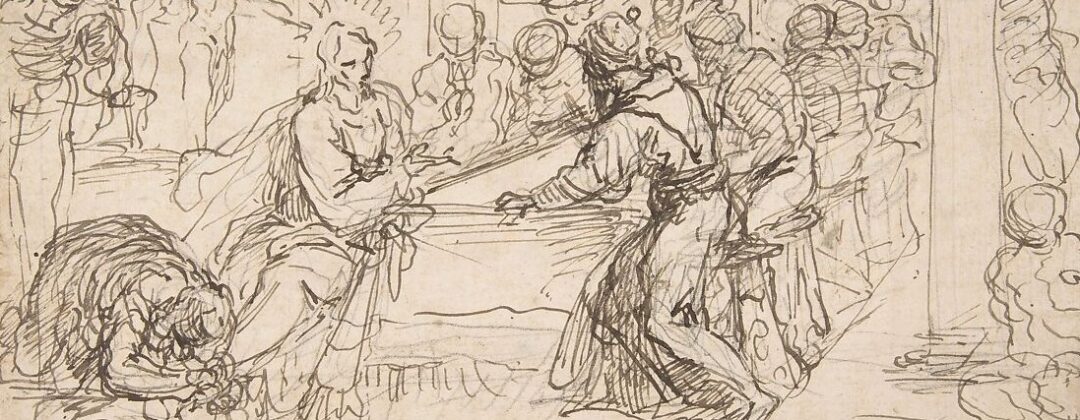
On the impossibility of a domesticated Jesus

Five years or so ago, I posted a brief comment on a piece of Fr. Andrew Greeley’s in the Chicago Sun-Times titled “There’s no solving mystery of Christ”; the original is no longer available on the Sun-Times website, but fortunately, it can still be found here.  I say “fortunately” because, while there is much on which I do not agree with Fr. Greeley, in this piece he did an excellent job of capturing something profoundly important:

Much of the history of Christianity has been devoted to domesticating Jesus—to reducing that elusive, enigmatic, paradoxical person to dimensions we can comprehend, understand and convert to our own purposes. So far it hasn’t worked. . . .

None of it works because once you domesticate Jesus he isn’t there any more. The domestic Jesus may be an interesting fellow, a good friend, a loyal companion, a helpful business associate, a guarantor of the justice of your wars. But one thing he is certainly not: the Jesus of the New Testament. Once Jesus comforts your agenda, he’s not Jesus anymore. Consider Bush’s “political philosopher.” His principal statement on that subject is, “Render to Caesar things that are Caesar’s and to God the things that are God’s”—a phrase that preachers for a couple of millennia have delivered with tones of triumph in their voice. Jesus had neatly dispatched his adversaries.

The preachers don’t explain what that ingenious phrase means in politics. . . . Where does one find the boundary between Caesar and God? Jesus didn’t say, and he still doesn’t. He won the argument, indeed deftly, but he leaves to his followers the challenge of how his dictum should be applied in practice. No easy task.

Or his challenge, “Let the one without sin throw the first stone.” Does that mean we don’t denounce any sins? Or that we should take a good long look at our conscience before we take up the stones? Or that if we are confident of our own sinlessness, we can start throwing the stones?

Jesus did not issue any detailed instructions, save perhaps “by this all shall know that you are my disciples, that you have love for one another.” And that really isn’t detailed at all. Nor is the instruction that you should love your neighbor as yourself. All of these sayings seem vague, slippery, disturbing, dangerous. Jesus is as obscure now as he was in his own time: as troublesome, as much a threat to the public order. . . .

One is tempted to demand of Jesus: “Who do you think you are to challenge us with your paradoxes, to trouble us with your weird stories, to warn us that you are not a reassuring traveling companion, but a messenger from a God who is even more paradoxical, even more difficult to figure out, even more challenging.”

If Jesus makes you feel comfortable with your agenda, then he’s not Jesus.

Or as I’ve been told St. Augustine wrote, “If you think you understand the nature of God, that which you think you know is not God.”  What we can truly know about God is limited to what God has revealed to us about himself; unfortunately, we’re always trying to go beyond that, sometimes out of an honest desire to understand, and sometimes out of a desire to make God be what we want him to be—which is the essence of idolatry.  Jesus doesn’t accept that; he will not be tamed, or made to conform to our desires.

This is not to say that everything we know about Jesus is wrong, or that it’s impossible for us to know or speak truth about God, because those statements are clearly not true.  It is, however, to say that if we think we hear Jesus saying what we want him to hear, we need to stop and consider the possibility that we’re really only hearing our own wishful thinking, and then go back and take a long second look.  If we believe in a Jesus who only challenges those who disagree with us, who only makes our opponents uncomfortable, then we’ve gotten him wrong.  In the Gospels, many people received comfort from Jesus, but no one was ever trulycomfortable with him; the closer his friends got to him, it seems, the more he confounded them.

The basic principle here is that we’re all sinners, we all have sin in our hearts, and therefore Jesus confronts all of us with our sinfulness and calls us to change.  He calls all of us to give up things that we deeply do not want to give up, to set aside our own desires and goals and plans so that he can give us his own, to make changes that we’d rather not make; he loves all of us just the way we are, but he doesn’t affirm any of us just the way we are—he loves us too much for that.  As such, whenever we hear the challenge of God, we need to look first to our own hearts, without exception, to see how his challenge is for us before we ever think to apply it to anyone else.

Jesus didn’t come to confirm us in our agendas and tell us we’re doing just fine as we are; he came to upskittle our agendas entirely and call us to a radical new way of living.  As Fr. Greeley says, “If Jesus makes you feel comfortable with your agenda”—whether that agenda be political, personal, professional, or what have you—”then he’s not Jesus.”  After all, if you’re the one setting the agenda, then you’re setting the course and expecting others to follow you, and Jesus never offered to follow us; instead, consistently, he said, “Follow me.”

As a final note, I would be remiss to post on this without noting that my friend Jared Wilson (of The Thinklings and The Gospel-Driven Church) has a book coming out next month addressing this same concern, titled Your Jesus Is Too Safe:  Outgrowing a Drive-Thru, Feel-Good Savior.  I’m looking forward to reading it.


Barack Obama’s priorities

The Commander-in-Chief of the United States Armed Forces finally saw fit yesterday, two days after the murder of Pvt. William Long and the attempted murder of Pvt. Quinton Ezeagwula, to issue a statement on this attack on two young men who had pledged him their service (HT:  Michelle Malkin):

I am deeply saddened by this senseless act of violence against two brave young soldiers who were doing their part to strengthen our armed forces and keep our country safe. I would like to wish Quinton Ezeagwula a speedy recovery, and to offer my condolences and prayers to William Long’s family as they mourn the loss of their son.

Compare this to Sarah Palin’s statement, issued Tuesday (yes, a sitting governor took this seriously enough to respond more promptly than the President of the United States):

The stories of two very different lives with similar fates crossed through the media’s hands yesterday—both equally important but one lacked the proper attention. The death of 67-year old George Tiller was unacceptable, but equally disgusting was another death that police believe was politically and religiously motivated as well.

William Long died yesterday. The 23-year old Army Recruiter was gunned down by a fanatic; another fellow soldier was wounded in the ambush. The soldiers had just completed their basic training and were talking to potential recruits, just as my son, Track, once did.

Whatever titles we give these murderers, both deserve our attention. Violence like that is no way to solve a political dispute nor a religious one. And the fanatics on all sides do great disservice when they confuse dissention with rage and death.

And then, further, compare this to the statement of our Commander-in-Chief on the murder of George Tiller:

I am shocked and outraged by the murder of Dr. George Tiller as he attended church services this morning. However profound our differences as Americans over difficult issues such as abortion, they cannot be resolved by heinous acts of violence.

What conclusions can be drawn from these comparisons?  I can think of four.

  1. Barack Obama cares more about the murder of abortionists than about the murder of American soldiers.  The former “outrages” him, the latter merely “saddens” him.
  2. Barack Obama is more willing to condemn those who act in the name of Christianity than those who act in the name of Islam.  Murder by the former is “heinous,” while murder by the latter is merely “senseless” (never mind that it made perfect sense to Abdulhakim Mujahid Muhammad, formerly Carlos Leon Bledsoe).  This makes sense, given that he appears to be committed to a policy of naïve appeasement of global Islam, while his attitude toward evangelicals who don’t like his actions is, “I won.”
  3. Governor Palin takes the murder of American soldiers more seriously than President Obama.
  4. The likes of al’Qaeda are going to be a lot more worried if Sarah Palin is elected president down the road than they will ever be about Barack Obama.

Superb analysis of the President’s Cairo speech

—one might almost call it a fisking—courtesy of Robert Spencer of Jihad Watch.  I’m not going to try to excerpt it (not only is it long, but the comments are interspersed with the text of the President’s speech, making it less friendly to excerpting), but I encourage you to go read it; Spencer exposes a lot of the West’s naïve misconceptions about Islam—misconceptions which, alas, Barack Obama seems to share.  Taken all in all, having looked at the speech, I agree with Spencer, Michelle Malkin, and to a remarkable degree, even HuffPo’s Peter Daou (whose article title, “Let Women Wear the Hijab: The Emptiness of Obama’s Cairo Speech,” captures my point of agreement with him beautifully):  we have good reason to be concerned.

The Gnosticism of sexual sin

In a recent ESPN Magazine article on Donald Sterling, the Clippers owner is quoted as saying—under oath, in a court of law—”When you pay a woman for sex, you are not together with her.  You’re paying her for a few moments to use her body for sex. Is it clear? Is it clear?”

That’s a stunning statement, for a number of reasons.  Most obviously, it’s stunning in its sheer crassness (something which, as Peter Keating shows at length in the piece, is completely characteristic of the man).  More than that, though, it’s stunning for what it reveals about his attitude toward sex—an attitude which I think is characteristic of far more people than just him.  In point of fact, while he puts it far more crassly than most people would, I believe the essentially Gnostic view he reveals here is in fact the default view in our culture.

Consider this in the light of a defense I’ve seen offered more than once of pornography, at least in the soft-core form:  “What’s obscene about a pretty girl taking off her clothes?” I will admit to having some sympathy with the way James P. Hogan framed this in his novel Giant’s Star:

[Victor Hunt] emerged from the kitchen and walked through into the living room, wondering how a world that accepted as normal the nightly spectacle of people discussing their constipation, hemorrhoids, dandruff, and indigestion in front of an audience of a million strangers could possibly find something obscene in the sight of pretty girls taking their clothes off.  “There’s now’t so strange as folk,” his grandmother from Yorkshire would have said, he thought to himself.

That, however, says more about the casual obscenity of much of our advertising than it does about pornography; both objectify the human body, if in different ways and for different reasons.  This defense is rooted in a complete misunderstanding of the issue.  It’s not that there’s anything obscene about the human body; far from it.  The human body is a beautiful thing, one of the most beautiful of God’s creations.  However, a human body is not merely a thing, but rather is an integral part of something even more beautiful:  a human being.  The obscenity is not in the naked body; the obscenity is in the treatment of a human being as merely a naked body, as just an object of desire to be used for one’s gratification rather than as a full person to be respected and honored.

The appeal to this, I think, is that an object can be whatever one wants to imagine it to be; it’s conformable to one’s desires.  Real human beings have wills and desires, integrity and dignity, of their own, and frequently are not conformable to one’s desires.  Real human beings have minds and ideas of their own; objects don’t.  In pornography, human bodies are effectively made available for the wish-fulfillment of others, ready to be used whenever they’re accessed by whomever would use them; they never say “no,” because they’re never sleepy, achy, sick, in a bad mood, or just plain unwilling.

If we understood the spiritual consequences of this, we would take it far more seriously than most people do; but most of us don’t, because we’ve bought the line that our bodies are separate from our spirits, and that most of what we do with our bodies doesn’t really matter spiritually because they’re temporary—they aren’t the real person, and we’re going to leave them behind when we die anyway.  They’re just not that important.  That’s how you get the idea that Donald Sterling expressed, that you can rent out someone’s body for sex and just be using their body, “not together with her” (or him)—which is not only the idea behind his caddish behavior, but is also in its essence the idea behind pornography.

Even people who consider themselves Christians fall into this thinking, and use it to justify departures from biblical sexual morality; the argument that God doesn’t really mean what the Bible says about premarital sex, or homosexuality, or adultery, or whatever, always seems to rest in the end on the presumption that what we do with our bodies really isn’t all that important, and so God can’t really care about it all that much.  That stuff in Scripture must have been a cultural thing, or must have been put in there for some other reason, because God can’t have a good enough reason to tell us not to do what we want to do.  (It’s rather funny, when you stop to think about it, how we never question why such matters shouldn’t be important to God when we obviously think they’re worth fighting over.)

The truth is, though, that our bodies aren’t merely containers for our spirits, but are intimately connected:  we are our bodies just as much as our spirits, and everything that we do with one and everything that affects one affects the other.  When we treat our bodies and the bodies of others as merely things to be used and deployed for our pleasure, it debases us and it debases the people we use.  We can’t do that without consequences.  We need to treat people as people and respect them accordingly, even if they don’t fully respect themselves.


The fringe is not the mainstream

I have to echo Robert Stacy McCain in expressing great gratitude and respect to The New Republic‘s James Kirchick.  Kirchick, an assistant editor at TNR who is also a contributing writer for The Advocate, is a liberal Democrat and practicing homosexual who had the integrity to write an opinion piece for the Wall Street Journal declaring, “The Religious Right Didn’t Kill George Tiller,” and calling out his fellow liberals for their mendacious and invidious comparison of pro-life evangelicals to Islamic jihadists:

But if the reactions to the death of Tiller mean anything, the “Christian Taliban,” as conservative religious figures are often called, isn’t living up to its namesake. If “Christianists” were anything like actual religious fascists they would applaud Tiller’s murder as a “heroic martyrdom operation” and suborn further mayhem.

Radical Islamists revel in death. Just witness the videos that suicide bombers record before they carry out their murderous task or listen to the homicidal exhortations of extremist imams. Murder—particularly of the unarmed and innocent—is a righteous deed for these people. The manifestos of Islamic militant groups are replete with paeans to killing infidels. When a suicide bomb goes off in Israel, Palestinian terrorist factions compete to claim responsibility for the carnage.

There is no appreciable number of people in this country, religious Christians or otherwise, who support the murder of abortion doctors. The same cannot be said of Muslims who support suicide bombings in the name of their religion.

I greatly appreciate his willingness to come out and make this point.  For all that Kirchick doesn’t much care for us conservative evangelicals (understandably, I will admit), he clearly has a sense of perspective on the matter that most of his colleagues in the media willfully do not have:

I hold no brief for the religious right, and its views on homosexuality in particular offend (and affect) me personally. But it’s precisely because of my identity that I consider comparisons between so-called Christianists (who seek to limit my rights via the ballot box) and Islamic fundamentalists (who seek to limit my rights via decapitation) to be fatuous.

Read the whole thing—it’s an excellent piece.  Yes, there are those who attach themselves to the pro-life cause as a way of justifying their destructive, nihilistic desires and providing a channel for their anger and hatred; but then, there are those who join the animal-rights movement or write for Playboy for the same reason.  You can’t judge a movement by the most extreme folks who claim to be acting on its behalf, or else I’d be justified in arguing (on the basis of the now-pulled Playboy piece referenced in that link) that all liberal men want to rape conservative women, something which is clearly false.

The truth is, there is no room in the pro-life movement for people who believe in killing abortionists, and there never has been; but those of us who are pro-life cannot thereby stop would-be murderers from claiming hatred of abortion justifies their actions and choice of victims.  All we can say is that anyone who does so hasn’t been listening to what we’re actually saying.

Nor is this an empty statement on my part; pro-life leaders have long recognized that there are those who would use the cause to justify violence, and have long been working to prevent that and explain the evil of it.  (That might explain why, overall, there have been so few cases of violence against the abortion industry, relatively speaking.)  For instance, almost fifteen years ago, Paul J. Hill, who had been defrocked and excommunicated by two different (conservative) Presbyterian denominations for his extremism, shot and killed a Florida abortionist and his security guard, wounding the guard’s wife; he was sentenced to death, a sentence which was carried out nine years later.  In justifying himself, he argued that “Whatever force is legitimate in defending a born child is legitimate in defending an unborn child.”

First Things took his actions and his argument seriously enough to publish a symposium that December in which sixteen pro-life leaders and theologians laid out in detail the reasons why killing abortionists only compounds the evil of abortion.  (Robert George, who made his position on this matter crystal clear this week, took that opportunity to write a satirical paragraph on the issue instead.)  Anyone in any doubt as to whether Scott Roeder is in any way representative of the pro-life movement should take the time to read it and be disabused of their false perception.

(My thanks to Presbyterians Pro-Life for their statement on the Tiller murder which reminded me of the First Things piece.)


Sarah Palin on the murder of Pvt. William Long

Here’s Gov. Palin’s statement (HT:  Mel):

The stories of two very different lives with similar fates crossed through the media’s hands yesterday—both equally important but one lacked the proper attention. The death of 67-year old George Tiller was unacceptable, but equally disgusting was another death that police believe was politically and religiously motivated as well.

William Long died yesterday. The 23-year old Army Recruiter was gunned down by a fanatic; another fellow soldier was wounded in the ambush. The soldiers had just completed their basic training and were talking to potential recruits, just as my son, Track, once did.

Whatever titles we give these murderers, both deserve our attention. Violence like that is no way to solve a political dispute nor a religious one. And the fanatics on all sides do great disservice when they confuse dissention with rage and death.

She’s right on all counts.  Contrary to my initial expectation, the killer here wasn’t a fringe anti-war activist, but rather an American Muslim convert and Yemen-trained Islamic terrorist.  My point still holds, though:  will the media and leftist pundits (but I repeat myself) treat Long’s murder as a terrorist act and go after those whose hateful rhetoric encourages such acts?  So far, nope.  (Go on, tell me you’re surprised.)

Update:  The Atlantic‘s Jeffrey Goldberg has noticed, as has Toby Harnden of the Telegraph.

Good books help rough days

Down with a gut bug today; have I mentioned I have a wonderful wife?  She swung by the library while she was out and about at one point and brought back a whole pile of books, including the first three of Jim Butcher‘s Harry Dresden novels, which a good friend of ours had strongly recommended a while back; I finished the first one, Storm Front, today, and am about 2/3 of the way through the second one, Fool Moon, and have enjoyed both a great deal.  For those not familiar with the series, think classic hardboiled detective fiction in contemporary Chicago but with the addition of magic and magical creatures such as vampires and werewolves; the protagonist, Harry Dresden, is a wizard and a detective.

The books tend toward the bleaker side of fantasy (not surprising, since the big blurb on Storm Front comes from the redoubtably dark Glen Cook), but not without hope, and Butcher does some things very well as a writer.  I wouldn’t call him a great stylist, but he has a core of interesting characters, writes some very nice scenes, and so far at least, is telling good stories of their kind; the books feel real.  Not much is original, but he’s given the standards his own twist, which counts for a fair bit.  For urban fantasy, it’s not a match for Neverwhere, but it’s an enjoyable read, and it has this advantage:  there’s a lot more of it.  It’s certainly brightened my day.