


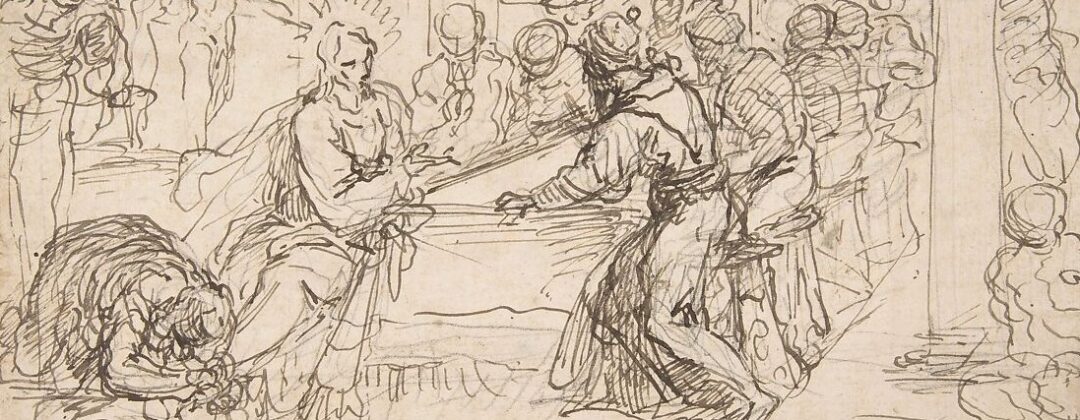

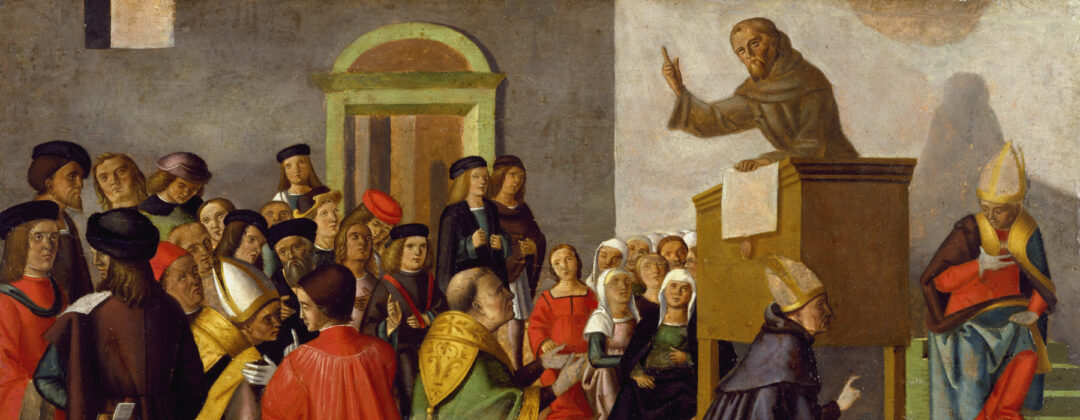




. . . you might want to consider that “No Parking” really means “No Parking,” even if you do drive a BMW . . .



. . . you might want to consider that “No Parking” really means “No Parking,” even if you do drive a BMW . . .
One of the great things about living in the Warsaw/Winona Lake area is experiencing the benefits of having a world-class music ministry, Dr. Patrick Kavanaugh’s Christian Performing Artists’ Fellowship and its MasterWorks Festival, located here. (This is especially great for me since Dr. Kavanaugh is also the music minister of the church which I serve as pastor.) Tonight, it was the Second Sunday series, which opened with Barbara Kavanaugh on cello playing a Bartok suite of Romanian folk dances and closed with Gert Kumi on violin playing a suite of Albanian dances by a 20th-century composer I’d never heard of before—both wonderful pieces beautifully played—as the bookends to a thoroughly enjoyable peformance. We are blessed.As I was sitting there in the dark of Rodeheaver Auditorium, the thought occurred to me: can we perhaps define art as those things which will endure, not only in this creation but in the new creation? There are various definitions and philosophies of art out there, with most of which I disagree at least in part, and I don’t have any well-developed and firmly-fixed ones of my own; that’s something I’ve been working on for a while now. I even wondered this past spring if art is even a small enough thing to define at all; I’m by no means sure it is. Even if it’s too big to define in its essence, it might yet be possible to define it operationally; hence my thought of this evening.On the one hand, I’ve believed for a while that what makes true art is partly about quality (for lack of a better word) and partly about truth; Ragnar Tørnquist wrote one of his key characters in The Longest Journey an excellent disquisition on the latter point, which I’ll post on at such time as I can ever get the game running on any of the computers that are currently consenting to function in this house. To say that those things which are both great enough and true enough to be preserved by God in the new heavens and the new earth qualify as art has a certain appeal to it. On the other hand, it does seem to me to be too restrictive. To take an extreme example, it seems safe to say that we won’t be reading Flaubert as we walk the streets of the new Jerusalem—but does that mean that Madame Bovary isn’t art? The conclusion seems to me self-evidently absurd. The worldview of the book is, I think, brutal hogwash; but Flaubert expresses it brilliantly and powerfully, and at an extremely high level of technical accomplishment. Can that not be art? I don’t really think so. Which means that my thought must be, at best, an incomplete definition: a category of art, but not the whole.Update: a conversation with my wife (who hated Madame Bovary) suggested an aspect I hadn’t considered: whatever the falsity of his philosophy and conclusions, Flaubert unquestionably captured the truth of the human condition under sin with great vividness; if one doesn’t believe (as I don’t) that human history and the reality of this world’s brokenness will be simply erased and forgotten in the new creation, then it makes sense to think that his artistic achievement might indeed endure for that reason. Maybe, then, the problem isn’t with my definition, but with my application of it.
“See to it that no one takes you captive by philosophy and empty deceit, according to human tradition, according to the elemental spirits of the world, and not according to Christ. For in him the whole fullness of deity dwells bodily, and you have been filled in him, who is the head of all rule and authority. In him also you were circumcised with a circumcision made without hands, by putting off the body of the flesh, by the circumcision of Christ, having been buried with him in baptism, in which you were also raised with him through faith in the powerful working of God, who raised him from the dead. And you, who were dead in your trespasses and the uncircumcision of your flesh, God made alive together with him, having forgiven us all our trespasses, by canceling the record of debt that stood against us with its legal demands. This he set aside, nailing it to the cross. He disarmed the rulers and authorities and put them to open shame, by triumphing over them in him.”
—Colossians 2:8-15 (ESV)
In Colossians 2, which I’m preaching through now with my congregation, Paul talks about thestoicheia, the “elemental spirits” or “elemental powers” who were believed by many in those days to control the natural world; the church in Colossae had gotten into a form of false teaching that was telling them they needed to pay homage or tribute of some sort to those spirits in order to progress in their spiritual lives. Paul, of course, will have none of that, and so he’s at pains to make it clear to them that Jesus is above all such powers and all such authorities that may exist, and that he’s the only source of the fullness of life they’re seeking.
Now, obviously, our culture doesn’t believe in those elemental powers anymore, but I don’t think that means it no longer believes in stoicheia; we just have different ones. Several weeks ago, I mulled this over in a post for a bit, and came to the conclusion that one such force in our society is sex. I didn’t come up with any others, though there are no doubt quite a few. In the comments thread, Doug Hagler named another one—and one which, I must say, makes him sound quite prescient in retrospect:
I almost shouted it, reading this—ECONOMICS. That is clearly our stoiche (not sure on the singular, its been a while), far more than sex is, IMO. When we wonder what to do as a nation, we listen to our economists. It is everyone’s fundamental concern going into a national election. It is our national obsession and our clearest deity. Everyone treats economics as a science, which in our culture, means a truth-discerning and truth-telling method, when it is in fact a value system of subjective measurement.
Anyway, that’s my vote for America’s “elemental spirit of the world”. Really, it probably fits better as a ‘ruler and authority’.
I don’t think it’s fair to say “far more than sex” as a general statement—for some people, certainly, while for others, it’s the other way around—but there’s no question, this is another power with overarching dominance in our society; and I can’t think of anything that could have illustrated or emphasized the truth of Doug’s point to a much greater degree than the crash of Fannie Mae and Freddie Mac and the whole chain of events which they precipitated. And in retrospect, given the saga of the rescue bill and the initial failure of the markets to respond to it as hoped, this part of his comment (emphasis mine) looks particularly telling:
Everyone treats economics as a science, which in our culture, means a truth-discerning and truth-telling method, when it is in fact a value system of subjective measurement.
That’s why we get things like this post of Hugh Hewitt’s considering the possibility that the stock market drop is not a rational response, but is in fact an irrational panic (which he says, incidentally, could mean a relatively quick rebound, at least to some degree): it’s the collision between our assumption that economics is a science and the reality of its fundamental subjectivity that produces, or at least is largely responsible for producing, bubbles and panics. A clearer illustration of the stoicheia in our culture and the way they affect our lives you would be hard-pressed to find. Kudos, Doug: good eye.
Of course, this raises the question (which Doug himself raised in his comment): if Christ has rendered all rulers and authorities impotent and has put them on display in his triumphal procession, what does that look like with respect to economics? Paul calls the Colossians, and by extension us, not to serve the stoicheia but only to follow Christ; how do we do that in the economic arena? The answer to that question is, I suspect, very large; one standard answer is the avoidance of materialism—not spending more than we can afford, not letting our lives be driven by owning and possessing things, storing up treasures in heaven, not allowing our belongings to become our idols—the prophets taught on this, Christ taught on this, the rest of the NT writers taught on this, and the church down through the ages has taught on this, and it’s nothing new. But when it comes to economics as a whole and its influence over us, that’s only part of the answer, and I’m not sure what the rest of it is. I suspect Doug or perhaps others might point in a socialist direction, away from the free market, but I don’t think that actually addresses, much less solves, the problem—as far as I can see, it just changes the terms. The real answer lies elsewhere.
This is a great clip I found tonight on Ray Ortlund’s blog:
Good stuff in a short clip. I’m not familiar with 13 Letters, which apparently is a hip-hop curriculum on the Pauline Epistles—not a combination which it would have occurred to me to expect, but it looks like they have some solid teaching effectively presented.I should note as well that I also greatly appreciated this comment of the Rev. Dr. Ortlund’s in the thread on his post, not least because I could too often say the same of myself:
God made us for greatness, for glory, honor and immortality (Romans 2:7). God wants that for us. But it happens only under God’s approval. One of the worst parts of my own fallenness is that God’s approval doesn’t mean nearly as much to me as it should. Sure, he matters. But what would really make my heart sing today is if you would just please, pretty please, adore me.Dishonoring to God.Manipulative of you.Unsatisfying to and weirdifying of me.But God is at work in our hearts for better things, to the praise of the glory of his grace.
I desire steadfast love and not sacrifice,the knowledge of God rather than burnt offerings.—Hosea 6:6 (ESV)Religion that is pure and undefiled before God, the Father, is this: to visit orphans and widows in their affliction, and to keep oneself unstained from the world. My brothers, show no partiality as you hold the faith in our Lord Jesus Christ, the Lord of glory. —James 1:27-2:1 (ESV)For whatever reason, I haven’t much mentioned Barb and her blog, A Former Leader’s Journey—maybe only once or twice, actually; I’m not sure why that is, since I appreciate her and what she has to say, but it’s just the way it’s played out. Tonight, though, I simply had to mention a beautiful post she put up today on worship, “Worship That He is Pleased With—or Worship in the Bathroom”; I think she goes right to the heart of the matter, and I commend her post to your reading.
As I’ve been doing these posts linking to material from the archives (my way of addressing the concerns Jared Wilson raised about the ephemerality of blogs as a medium), I’ve been working my way through posts from the first part of last year. There isn’t a lot from the middle of 2007, though, so for the moment I’m going to jump back to the end of 2003, when I first started doing this.“The Occupation of Iraq Means Liberty”
That line comes from a column by Kamel al-Sa’doun, an Iraqi then living in Norway, writing in a London-based Arabic daily, who called the U.S. invasion and occupation “a blessed and promising liberation for Iraq, even if the U.N., Europe, Russia, India, and all the Arabs say otherwise.”“Evangelism”? What’s that?
On the controversy over Avodat Yisrael, a Messianic Jewish congregation planted by the Presbytery of Philadelphia, and what it said about the PC(USA) and evangelism.No guru, no method, no teacher
On the incarnational art of Van Morrison.“All Americans”? Uh-huh, riiight . . .
On the illusion of post-9/11 international goodwill.“That’s what Christmas is all about, Charlie Brown.”
No, network execs weren’t any smarter 43 years ago, just luckier (maybe).“There’s too much to do—I’m bored.”
On the overstimulation and emptiness of contemporary Western society and how it stimulates us to sloth.A tree grows in Brooklyn
On Christmas, Kwanzaa, and the place of holidays in the public square.
(Genesis 17:9-14; Colossians 2:9-15)
If you were here last week, you’ve probably noticed the gap. Last Sunday, we read up to verse 5 of chapter 2, and now we’re picking up this morning with verse 9. Given that I’m a humanities wonk by my own confession, you might feel justified in wondering if this represents a small problem with my math skills—perhaps I haven’t noticed before that there are those other numbers in between 5 and 9?
Don’t worry, though—it’s nothing like that. I’ll grant you I’m not the first person you’d want planning economic policy or doing the math to make sure your roof will bear the snow load, but I’m up to basic counting. The truth is, we read what we read this morning because of the way verses 6-23 of this chapter are structured. We have this long passage in this chapter in which Paul for the first time explicitly attacks the Colossian heresy, the false teaching that’s been seducing them away from Christ, and tells them how they ought to be living. It’s practical in the beginning and practical at the end—you might say that’s the “what”—and then here in the middle, we have the section we read this morning which gives the “why”: the theological foundation and justification for what Paul says before and after it. So what I decided to do is to take things a little out of the order Paul uses, take this section first, and then look at the passage as a whole next week and see how he applies it.
The opening statement of this section should sound familiar to you by now: “In Christ all the fullness of the Deity lives in bodily form.” If this sounds a lot like “He is the image of the invisible God,” chapter 1 verse 15, and “God was pleased to have all his fullness dwell in him,” 1:19, to you, good, because it should; Paul here is making that same point in a different way, from a bit of a different angle, because this is the point that the Colossians just have to get straight. They want to see God, they want to know God, they want to experience the reality of the presence of God, which is completely right and completely admirable—but they don’t know where they need to go to do that, or how to have that experience, because they haven’t really figured out who Jesus is. They haven’t grasped that in Jesus, the invisible God became visible, and the whole of God—not just part of God, not just certain aspects of God, but God in all of who he is, in all his character, all his love and mercy and justice and grace and holiness, in all his power and glory, became human, and (as we talked about earlier this year) is still human. They haven’t figured out that everything they’re seeking is already theirs in Christ.
And so Paul says again, “In Christ all the fullness of the Deity lives in bodily form,” and then he continues, “and you have been given fullness in Christ, who is the head over every power and authority.” For the Colossians, as we’ll talk about in greater detail next week, those words “power and authority” relate to the spiritual powers they thought they needed to appease in order to pursue the fullness of spiritual life; for us, they may mean something different. The point is clear regardless: whatever other powers there might be, whatever other authorities you might think you need to acknowledge and respect, they are under Jesus’ control, and they aren’t the way for you to find the fullness you’re looking for. The only source of true fullness of life is Jesus—and in him, if you belong to him, you already have it.
Where Paul goes next with this may sound quite strange to our ears, since we lack the Jewish background: he discusses this in terms of the Jewish sacrament of circumcision. (“Sacrament” of course isn’t a Jewish term, but I think we can reasonably use that language.) Circumcision of males was a physical sign of God’s covenant with his people, going all the way back to the covenant he made with Abraham in Genesis 17; but fairly early on in the life of God’s people, God started using it as a metaphor and talking about the necessity for a spiritual circumcision—that his people didn’t just need to snip their flesh, they needed to circumcise their hearts, to cut away the parts of them that resisted God and his will. Just as physical circumcision was an act of outward obedience, accepting the sign of the covenant, so too they needed an act of inward obedience, accepting the authority of the covenant; but as the history of Israel showed, this spiritual circumcision was a task beyond their ability or will to accomplish. It was only in the work of Christ that that could finally become a reality.
I should note at this point that I part company with the NIV in verse 11. A more literal translation here would read, “In him you also were circumcised in the putting off of the body of flesh”; the NIV, as you saw, takes “the body of flesh” to mean “the sinful nature,” but I don’t think that’s what Paul’s on about here. Rather, I think he’s using this as a metaphor for the death of Christ on the cross. In circumcision, a strip of flesh was cut off to mark the entry of the boy or man into the covenant of God; in the crucifixion, Jesus’ whole body was torn away on our behalf to bring about our entry into the new covenant of God. In his death, we received that spiritual circumcision to which Moses and the prophets had pointed, because our hearts were made new.
Specifically, our hearts were made new through our participation in the death and rebirth of Christ. We were circumcised with him in his circumcision—which is to say, who we were before, our old natures and old selves, died with him in his death—and then buried with him in baptism; and then in his resurrection we were raised with him, with a whole new life—his life in us, by the work of his Holy Spirit. The work of God has obviously not been completed, and will not be until Christ comes again, but it has already been accomplished; all that remains is to see it worked out and brought to its full harvest, because the work Christ has begun, he will most surely finish. In the meantime, we can live in the assurance that, as Paul says in Galatians 2:20, it is not we who live, but Christ who lives in us, and that we have his power by his Spirit to walk in his ways.
In verse 13 Paul intensifies this point by changing his terms: not only have we been given new life in Christ, but that life is the first true life we’ve had; before the work of Christ in our hearts, we were alive physically, but dead spiritually, crushed under the weight of our sin and “the uncircumcision of our flesh.” Here again, the NIV takes “flesh” to mean “sinful nature,” and here again I disagree. This is a literal statement with a symbolic meaning: many at least in the Colossian church were in fact uncircumcised, because they were Gentiles. This was significant because circumcision was an act of obedience to the command of God to his people, and thus uncircumcision had been a marker that one had not accepted God’s authority; it was a symbol of alienation from God and his covenant. The point of Paul’s words is clear: you were estranged from God by your disobedience, you were spiritually dead in your sin, and then God came to you in Christ and forgave your sins in order that he might bring you back to life in Christ. He did this freely, as an act of his grace, in spite of the fact that we didn’t deserve it.
But how did he do it? Well, that’s where things get a little tricky, in verses 14-15. The NIV doesn’t help matters here—in truth, their translation committee didn’t cover themselves in glory on this passage—but the translation “written code” is just a bad one, because that suggests a code of laws to our ears, and that’s not what’s in view here. The Greek word at this point literally means “handwritten,” and it was used to signify a note of indebtedness written in one’s own hand—an IOU, but legally enforceable, and containing penalty clauses. We owed God obedience, and the penalty for defaulting on that debt was death; that certainly includes the Old Testament Law, which made both the debt and the penalty explicit, but it’s a far larger thing than that, going all the way back to God’s creation of humanity at the very beginning. God had an IOU on us, and he could have simply enforced it. Instead, he erased it, and then he took it and nailed it to the cross. The IOU against us was nailed to the cross of Christ as the accusation against him; the debt we could never repay, he paid with his life.
Now, remember, back in verse 10, Paul proclaimed Christ the head over every power and authority; one of the points he’s trying to make to the Colossians is that these spiritual powers they’re all caught up about are nothing next to Jesus. Here in verse 15, he comes back around to that point, in a very strange sentence. The word the NIV translates “disarmed” here, following the standard English translation, is actually the same word that’s translated “putting off” back in verse 11; it means that God stripped the powers and authorities. Of what? The translation “disarmed” suggests their weapons, but I think there’s a better read here than that. I believe the imagery here is of a royal court, of a king stripping public officials of their position, authority, rights, and pay, reducing them to powerlessness and insignificance, and symbolizing that by taking away their badges of office and their finery.
I think that’s what we have here. Jesus, by allowing those powers and authorities—working through human leaders—to strip him of his body by killing him, turned the tables on them; in doing that, he took the IOU against us that gave them their power over us and destroyed it, thus enabling him to strip them in turn of that power. And then, having reduced them to utter helplessness, he exposed that utter helplessness to the world, displaying them in a triumphal procession. This was something the Romans did; when one of their generals won a war, he would drag the enemy leaders back to Rome, where he would have a massive victory parade through the streets, with all the people of the city turned out to cheer him—and right behind the general would come the leaders he’d defeated, in chains, naked, exposed to the whole city of Rome in every sense of the word. They had dared to challenge Rome, they had dared to think that they had the power to resist—so they would receive the just punishment of having their complete powerlessness, their inability to resist the might of Rome, put on display before the gods and everybody. Jesus did the same to the powers and authorities in his resurrection, proving their complete powerlessness before him by showing the whole world that not even their greatest weapon—death—could overcome him.
And the sign of his triumph, the banner of his procession, the mark of his victory, was the cross. Normally an instrument of torture, both physical and psychological, designed to make dying not only as long and agonizing but also as humiliating and degrading as possible—the Romans were big on making examples of anyone who gave them trouble; the idea that criminals should be allowed to die with dignity in comfort would never have occurred to them—the cross was a horrible thing; but Jesus took that and flipped it around, making that place of sorrow and defeat a place of glorious victory.
Now, this is pretty dense stuff, and it comes out of a mindset that’s unfamiliar to us; that’s why I thought it was important to take the time to go through it this week and lay it all out before looking at the whole passage, and how this section fits into it, next week. So, we’ll be coming back to this; but for this morning, I want you to notice something. Let’s look at this in the ESV, since it’s a more literal translation and we can see this more clearly. Verse 9: “In him the whole fullness of deity dwells bodily, and”—verse 10—“you have been filled in him”; verse 11: “In him also you were circumcised with a circumcision made without hands”; verse 12: “having been buried with him in baptism,” and here I think the ESV gets it wrong, “in him you were also raised with him through faith”; verse 13: “God made you alive together with him”; and then verse 15: “He [that is, God] disarmed the rulers and authorities and put them to open shame by triumphing over them in him.” In whom? With whom? Christ. Everything is in Christ, with Christ, by Christ. It’s not in our own strength, it’s not in our own work, it’s not in our own accomplishments, it’s not in our own determination, it’s not in our checklists or anything we can do; it’s only in Christ, only by his grace, only by his power, only through the cross.
If you read my last post, you know that my prognosis for the McCain/Palin ticket is pretty grim. This raises the question (at least in the minds of some), what does this mean for Sarah Palin and her political future?The answer is, I think, nothing bad. The immediate presumption is that it would be better for her political prospects to win this election, since “incumbent VP” is usually a pretty strong position from which to run for president; but as I noted last night, Gerard Baker’s right that this is probably going to be a rough four years to be sitting in the Oval Office, and there’s no guarantee that a McCain presidency would be a successful one. Obviously, I don’t believe an Obama presidency will be, and just as obviously, I think a McCain administration would at least be better; I don’t know that I actually think it would be good. I think his judicial appointments would be solid, and I trust his instincts and judgment on foreign policy and national security; given, however, that he can’t even make up his mind whether he wants to attack Barack Obama or not, or on what, or how, or what his message is, or how it should be delivered, and that he can come up with plans on health care and other issues but can’t seem to muster the wit and will to articulate and defend them clearly . . . well, let’s just say that if he does win, I don’t have high hopes for his administration’s record on domestic policy. I think a President McCain could handle Mahmoud Ahmadinejad and the rest of the crazies in Iran as well as anyone could; but facing an equally hostile regime on Capitol Hill, I think he’d be much less effective in dealing with Nancy Pelosi and Harry Reid. As such, it’s entirely possible that a loss in November will be a blessing in disguise for Gov. Palin.The question is, where does she go from here? The immediate answer is of course obvious: back to Alaska. Equally obvious is the fact that that doesn’t answer the question. At this point, Gov. Palin would have to be regarded as the frontrunner for the GOP presidential nomination in 2012, since she has national recognition and a broad base of support in the party, well beyond anything that any other potential candidate can muster; the question is, what does she need to do to build on that?The first thing, I think, is to keep herself out there as a national politician. This may be somewhat tricky to do, because the usual way to do this—run for the Senate—is not an obvious option for her. Lisa Murkowski’s Senate seat comes open in 2010, but for Gov. Palin to run for it simply in order to facilitate a presidential run two years later would be the worst sort of politics, and it seems hard to believe that Alaskans would go along with it. What’s more, such a tacky move would only damage Gov. Palin’s standing and reputation. There is the possibility that Ted Stevens’ seat could be available after the election, if he loses his trial but wins re-election; in that event, the Senate would probably expel him to serve his sentence, which would trigger a special election in which she could run for his seat. This sequence of events, however, seems unlikely (among other things, the government’s case against him is actually remarkably flimsy), and even if it did occur, it might not be a good opening for Gov. Palin anyway. Sen. Stevens has won a rock-solid seat by bringing home large quantities of pork, on which the state of Alaska is largely dependent, given how much of the state is owned by the feds. Gov. Palin has done a fair bit in her time in office to reduce that dependence, but there’s a lot more work to do in that regard; for her to run for the Pork King’s seat on a pledge not to seek pork probably isn’t tenable at this point—and for her to run on any other basis would ruin her nationally.Given that, it seems that she will need to work by other means to keep herself on the national stage. It would help if she were to do so in a way that convinced conservative skeptics like Charles Krauthammer, Kathleen Parker, George Will, David Brooks, and Christopher Buckley—not that their opinions are particularly important, but because impressing those who ought to be her supporters and currently aren’t is the most direct way to establish herself as the true standard-bearer of the Republican Party. As well, it would be best for her to choose an approach that will not only benefit herself but also benefit the party, strengthening it and bringing it back to its roots. Therefore, as one who framed the troubling challenge presented by Iran with the question “what would Reagan do?” I would suggest that Gov. Palin should ask herself the same question, and do what Gov. Reagan did in the 1970s:
Reagan . . . [spent] years in the 1970s mulling the great issues of the day, reading voraciously, and presenting detailed commentaries on everything from the SALT and Law of the Sea treaties to revultions in Sub-Saharan Africa to the future of Medicare. Then and only then, finally, after 16 years on the national stage, did the GOP give Ronald Reagan its nomination and present him as its candidate for the presidency.
Obviously, she’s still going to have her day job; but in and around that, and raising her kids, I believe Gov. Palin should devote as much time as she can to studying and writing on the great issues of our own day. Keep building her governing experience dealing with the challenges of Juneau—and as much as possible, take advantage of that to use Alaska as a “laboratory of democracy” on issues like health care—but engage intellectually as well with the challenges of Iran and Pakistan, Social Security and judicial philosophy, the future of NATO and how to deal with a resurgent Russia, practical approaches to changing the system in D.C., and what our stance ought to be toward China. Co-author pieces with leading conservative intellectuals—maybe an article on judicial nominations with Antonin Scalia, to throw out one wild idea. Help rebuild the conservative intellectual treasury that was squandered by the GOP during its time in power. And off these articles (and perhaps books), I’d like to see her give speeches under the auspices of the Hoover Institute, the Heritage Foundation, the American Enterprise Institute, the Ethics and Public Policy Foundation, the Institute for Religion and Public Life, and other such organizations.In short, I believe Gov. Palin should keep her name out there, not just by doing political things (though she should certainly continue as she has begun in Alaska), but by using both her position and her gifts to articulate, develop and defend conservative political philosophy and its applications. In so doing, if over the next four years voters become accustomed to seeing her name and picture appear along with insightful, well-argued, thought-provoking pieces in places like The Atlantic, the Wall Street Journal, conservative opinion magazines such as National Review, the Weekly Standard, and The American Spectator, websites like RealClearPolitics, and perhaps even on occasion in the MSM if they allow it—including, on topics which make it possible, illustrations from her own achievements in Alaska—then she’ll maintain her public profile but in a way that gives the lie to those who’ve tried to dismiss her; and along the way, she’ll reinvigorate American conservatism in much the same way as Ronald Reagan did, and help the GOP along in the necessary task of taking stock and getting back to being the party it needs to be. Two birds, one stone—and an entirely fitting task for one who would be her party’s leader, to start by leading it back to its soul.
I noted yesterday that I expect Barack Obama to win in November. I’m not one of those who think the race is over, not by a long shot—I’m just skeptical about the McCain campaign’s ability and will to make its case, especially after blockheaded moves like writing off Michigan. The key, I think, is that they haven’t been able to convince enough people that Sen. Obama isn’t a centrist (and aren’t likely to do so), even though on all the evidence, he isn’t. He’s a gifted politician at letting people believe of him what they want to believe, and people would prefer to believe that he’s “a uniter, not a divider” (for all that, I’d prefer to believe it); John McCain hasn’t succeeded in convincing enough people otherwise to win.The thing is, unlike George W. Bush, who did have a record of working in bipartisan fashion in Texas, Sen. Obama has no such record; and if such talk from the bipartisan Gov. Bush didn’t translate to results in his presidency, how much less should we expect true bipartisanship from a President Obama?Perhaps the most interesting indicator on this came during the debate when Sen. McCain said of Sen. Obama, “It’s hard to reach across the aisle from that far to the left.” Sen. Obama’s response: “Mostly that is me just opposing George Bush’s wrongheaded policies.” He seems to have thought that was a good comeback—as did others, from the post-debate commentary—but it wasn’t; in point of fact, it was a concession, one which offered a real insight into Sen. Obama’s mind. What he said in effect was, “You can’t expect me to be bipartisan when confronted with policies with which I disagree.” Granted, one must be careful not to push one sentence too far, and certainly absolutizing it would be unjustified; but the attitude expressed in that line is the exact antithesis of true bipartisanship. It’s the attitude that defines “bipartisanship” as “I’ll work with them when they’re not wrongheaded”—which tends to boil down to “when they do most of the compromising.” And given that George W. Bush wasn’t really all that conservative, it’s not like Sen. Obama (and the rest of the congressional Democrats) were being asked to reach a long way across to the right. But then, as Stanley Kurtz notes, this is the pattern for Barack Obama:
Obama’s vaunted reputation for bipartisanship is less than meets the eye. The Illinois legislature has long been home to a number of moderate Republicans, less fiscally conservative than their colleagues, many from districts where the parties are closely balanced. It was easy enough to get a few of these Republicans to sign onto small, carefully tailored spending bills directed toward particularly sympathetic recipients. The trouble with Obama’s bipartisanship is that it was largely a one-way street. Overcoming initial opposition from Catholic groups, for instance, Obama cosponsored an incremental bill on abortion, requiring hospitals to inform rape victims of morning-after pills. Yet rejecting compromise with the other side, Obama voted against bills that would have curbed partial-birth abortions. In other words, Obama is bipartisan so long as that means asking Republicans to take incremental steps toward his own broader goals. When it comes to compromising with the other side, however, Obama says “take a hike.” Obama voted against a bill that would have allowed people in possession of a court order protecting them from some specific individual to carry a concealed weapon in self-defense. The bill failed on a 29-27 vote. Bipartisanship for thee, but not for me: That’s how Obama ended up with the most liberal voting record in the U.S. Senate.
This all suggests that all the post-partisan language we heard from Sen. Obama ca. 2004 is unlikely to be reflected in an Obama presidency—especially since whatever his talk, Nancy Pelosi and the rest of the House and Senate Democrats aren’t running on promises of bipartisanship. They’re going to want to press their agenda, and who gives a hang what the GOP wants. As a consequence, if President Obama wants to get bills passed—and he will, as every president does, because that’s how presidents have “accomplishments” and “legacies”—it will have to be the bills they want, on their terms; Speaker Pelosi, Senate Majority Leader Harry Reid, and the rest of the Democratic powers on the Hill will take up their pipes and fiddles, and President Obama will dance to their tune. Speaker Pelosi will be the dominant figure in national politics (since I expect Majority Leader Reid to turn out pretty clearly as second fiddle to her first), and it will be her agenda driving the bus.Now, this might be a pretty stiff conclusion to draw, but there are several good reasons to think that this is how it will go. First, as Dick Morris pointed out three months ago, this is what happened to Bill Clinton in 1993, even though the congressional Democratic caucus was considerably less liberal then than now (for example, the Speaker of the House was Tom Foley of conservative eastern Washington, not Nancy Pelosi of liberal San Francisco) and the new president was a former governor who was used to working with a legislature. Clinton couldn’t “triangulate” with his own party firmly in control on the Hill, and so
as he took office as president, Bill Clinton found no alternative but to move dramatically to the left, shelving for the moment his promises of a middle-class tax cut and welfare reform. He had no choice.The Democratic majorities in both Houses served him with notice: Either you stay within the caucus and not cross the aisle in search of support for centrist policies, or we will do unto you what we did to Jimmy Carter when Tip O’Neill turned on him and made his life miserable.
If Gov. Clinton couldn’t govern as a centrist with the Democratic Congress of 1993-94, it’s almost inconceivable that Sen. Obama will be able to do so with the even more liberal Democratic Congress we will likely have in 2009. For one thing, he doesn’t have the experience in how to get his own agenda through a legislature; for another, despite all his use of centrist language, Sen. Obama has no observable record of centrist political impulses, much less achievements. (Indeed, he has little record of achievements at all, but we’ll get to that in a minute.) That’s why Stanley Kurtz, in his extensive examination of Sen. Obama’s years as a state senator, says he’s “fundamentally . . . a big-government redistributionist”:
Obama’s overarching political program can be described as “incremental radicalism.” On health care, for example, his long-term strategy in Illinois was no secret. He repeatedly proposed a state constitutional amendment mandating universal health care. Prior to the 2002 budget crisis, Obama’s plan was to use the windfall tobacco settlement to finance the transition to the new system. That would have effectively hidden the huge cost of universal care from the taxpayer until it was too late. Yet Obama touted his many tiny expansions of government-funded health care as baby steps along the path to his goal. The same strategy will likely be practiced-if more subtly-on other issues. Obama takes baby-steps when he has to, but in a favorable legislative environment, Obama’s redistributionist impulses will have free rein, and a budget-busting war on poverty (not to mention entitlement spending) will surely rise again.
As such, where President Clinton does seem to have been at least someone uncomfortable with the line he had to toe at the beginning of his term (judging by the way he moved toward the center once the reality in Congress changed), Sen. Obama is likely to be quite comfortable with that agenda. (He has, after all, supported it 97% of the time in the Senate when he’s bothered to show up to vote.) The reality of bipartisanship can be expected to disappear on all important matters (except perhaps when congressional Democrats want to be able to blame Republicans for an unpopular necessity), leaving behind only the language—which will likely be used primarily to bash Republicans as obstructionist for not going along with the program.This is especially true given that Sen. Obama has no record of resisting his own party. Rather, he’s been a machine politician for his whole political career; it was the Chicago machine that helped create him, and its own rules by which he played to force Alice Palmer out of his way in his first election, and he’s never once stood up to it. He’s never challenged it, or questioned it, or even really sought to influence it in any way. He even endorsed Richard Daley for re-election as mayor, which was perhaps the one time he really disappointed his liberal supporters in Chicago (since Mayor Daley’s an old-school Democrat, not a modern liberal Democrat), because he’s the boss and you don’t mess with the boss. Then down in Springfield, when even Illinois politicians call their state “one of the most corrupt at this point in the United States,” he claimed to make a difference, but nothing really changed, except that he contributed to the growth in spending that has led to severe budget problems in Illinois. Indeed, even now that he’s out of that environment, his state’s junior U.S. Senator and his party’s presidential candidate, he still didn’t want to stand up to the political bosses, like his mentor Emil Jones, the president of the Illinois State Senate; when asked to use his influence to help resurrect an important ethics bill aimed at reducing the corruption in Springfield, he initially refused; it was only when coverage in the Chicago papers made that problematic that he changed his mind and asked his old mentor to reconsider the issue. The other concern that I see here is in the words and attitudes of Speaker Pelosi, Harry Reid, Charles Schumer, and other senior Dems. Every time they open their mouths, I’m a little more convinced that they don’t see Sen. Obama as the leader of their party, but as the instrument through whom they intend to accomplish their purposes. Whether it’s Sen. Schumer declaring that Sarah Palin’s “lack of experience makes the thought of her assuming the presidency troubling” while remaining serenely untroubled by Sen. Obama’s lack of experience (which makes me think that the subtext is “he’s just out front running the campaign; when it gets down to brass tacks, it will really be Uncle Joe running the show”), or Majority Leader Reid calling on Sen. McCain as essential to help solve the financial crisis while essentially ignoring Sen. Obama, I just don’t see any reason to believe that these folks take their own nominee, the presumptive head of their party, seriously. I’m increasingly of the mind that they see him as the PR-flack-in-chief, the appealing face they want to put on the front of their agenda, nothing more—and if he should try to break out of that role and stand up to them, they’ll punish him for it.As a result, I have four substantive concerns about an Obama presidency. Two might be described as “conservative concerns”—things I don’t want to see because I’m conservative in my thinking that those who are liberal will welcome. The other two I think can fairly be called general concerns, because they’re things that it seems fair to assume liberals wouldn’t want to see happen either.One, I expect to see a hard-Left turn on social issues, including a significant reshaping of the federal judiciary. This, I think, is Reward #1 President Obama will owe his base, and one which he’ll be happy to give them; based on past performance, I expect the Senate GOP to roll over for this process and present their collective belly in submission. Obviously, liberals will be glad to see an administration committed to abortion on demand, expansion of gay rights, the submission of our Constitution to international opinion, etc.; I won’t.Two, I expect to see a hard-Left turn on economic issues. Hugh Hewitt did an excellent job of laying out what this will look like in his post “President Barack Hoover”; I don’t see any need to reinvent the wheel (especially when I couldn’t do half as well at it), so I’ll just encourage you to read it, with this comment: the core of Hewitt’s post is the reality that Sen. Obama’s announced agenda, if he puts it into practice (and I believe Speaker Pelosi et al. will hold him to it), will be a recapitulation of the mistakes President Hoover made that played a major role in turning a stock-market crash into a depression. This is a very real possibility, and I believe is a major reason why the markets are continuing to perform poorly: they expect Sen. Obama to win, just as I do, and they expect him to put his plan into effect, just as I do. Thus his own plan helps drive the economic crisis that will help him win, which is another neat little irony. Still, again, I realize that the Left has a different view on this than I do; we’ll see who’s right. I’ve certainly never claimed to be infallible, but I think the record of the last eighty years bears me out: raising taxes in a crisis brought a depression; the Reagan tax cuts started a long period of growth (not uninterrupted, but an upward trend for a long time) that has benefited everyone. Yes, we still have a lot of people who are poor by comparison to society as a whole—but materially, those who are poor today are a lot richer than the poor of thirty years ago.Three, I believe the approach we’ve seen from the Obama campaign to dissent and criticism will be repeated in the policies and responses of an Obama-led Executive Branch; given the clear willingness of his campaign to suppress freedom of speech to prevent criticism of their candidate, I believe we’ll see the same willingness from his administration and his chief congressional allies. This will mean a surge in the kind of the strongarm political tactics that we’ve already seen entirely too often this year. The thin part of the wedge will be the reinstitution of the “Fairness Doctrine” as a political/legal weapon to silence conservative talk radio and the pundits of Fox News. (Given what you can do with the Internet these days, I don’t think it will actually work to any significant degree; if that drives the Dems in Congress to try to regulate Internet speech, we could really be in for a battle royale.) Now, given that many American liberals want to see the return of the “Fairness Doctrine,” it may be optimistic of me to call this a general concern; it could turn out that liberals as a class are perfectly happy with censorship and political thuggery as long as it’s only used against people with whom they disagree. Certainly that has proven to be the case in other countries. This isn’t Canada, however, and I don’t think it’s likely to be any time in the near future; until proven otherwise, I think it’s necessary to give American liberals credit that their commitment to freedom of speech is real, and thus believe that most of them will not be willing to tolerate and defend this sort of behavior over the long haul, even if carried out by politicians they otherwise support. I certainly hope they won’t, because the Obama campaign’s efforts to shout down Stanley Kurtz and David Freddoso (in an effort to intimidate Chicago radio station WGN into canceling their appearances on Milt Rosenberg’s show) ought to be disturbing to anyone who cares about free speech. Of even greater concern should be the Obama “truth squads” in Missouri, where the campaign enlisted allies in public office to threaten prosecution of any TV station that runs any ads about Sen. Obama that the campaign deems untrue. Not only is this approach outrageously biased (one side’s allowed to lie, but the other isn’t?), it gets into some very grey areas about interpretation and intent, and thus raises some real concerns as to the approach an Obama Department of Justice might take to the First Amendment. This kind of approach, like Joe Biden’s suggestion that an Obama/Biden administration might prosecute the Bush administration, is nothing more nor less than the use (or threat of use) of political power to punish one’s opponents, intimidate critics, and silence dissenters; it’s the sort of thing we’re used to seeing in Zimbabwe, not here—and as the case of Zimbabwe shows, there’s nothing, not even money, that can corrupt a democracy faster, or more severely. I’ve argued before that one of the great problems with our politics in this day and age is that we absolutize our own perspectives—we assume that our own perspectives and presuppositions are the only legitimate ones, and that those who disagree with us can’t possibly be doing so sincerely, but must be acting out of motives that are selfish or otherwise wrong. The criminalization of politics, which we’re starting to see urged by the Obama campaign, is a more extreme version of that problem, because it argues that those motives are not only wrong, but are in fact criminal in nature. The chilling effect of that sort of approach should be deeply worrisome not just to conservatives, but also to true liberals.Four, and clearly a matter of general concern: al’Qaeda is weakened badly but far from dead—they still have the ability to pull something, and there’s good reason to think they’ll try. They’ve tested each of the last two administrations with a major attack in the first year (even if the 1993 World Trade Center attack didn’t succeed), and they’re bound to repeat the pattern if they can. As Hugh Hewitt says, “International jihadism must sense this is a moment in which any strike they can muster would have enormous consequences for Western confidence,” which gives them a powerful motive. This will only be reinforced in the case of an Obama administration, because al’Qaeda will almost certainly be denouncing him as an apostate—they’ll have to follow up their propaganda with an attack. If I had to guess, I’d think they’ll target the DC area, some combination of the Pentagon, the Capitol Building and the White House; my fear would be that they’ll use suitcase nukes.If and when this happens, I predict that we’ll see the same sort of ineffective, dithering response from Obama/Pelosi/Reid and their foreign-policy advisors that we saw to al’Qaeda provocations during the Clinton administration. (Remember the cruise-missile attack on the pharmaceutical plant in the Sudan?) I say this for a couple reasons. First, the sort of thing we’ve seen from Sen. Obama on foreign policy has been stubbornly refusing to admit that the surge worked in Iraq; stubbornly refusing to admit that we’ve significantly weakened al’Qaeda through the fight in Iraq; failing to understand that Afghanistan is a nearly impossible place to fight a war; repeatedly publicly announcing his intention to violate Pakistani sovereignty should he be elected (and why is it OK to fight in Pakistan but not in Iraq?); proclaiming moral equivalence between invader and invaded when Russia launched its attack on Georgia, then changing his position a couple times; allowing his running mate to tell the Israelis that an Obama administration wouldn’t take any serious measures to prevent Iran from going nuclear; surrounding himself with people who don’t like Israel when Israel is our only firm, stable ally in the Near East; and proclaiming repeatedly that he will meet with enemy dictators face to face without preconditions. I don’t see any signs that he understands how to conduct foreign policy effectively, that he has the instincts to identify an effective response, or that he has the will to carry it out.A couple years into an Obama presidency, I expect to see someone write the same sort of article about him that James Fallows wrote about Jimmy Carter; like President Carter, Sen. Obama is bright, fluent, and well educated, but ineffectual. Indeed, he lacks even the modest record of achievement Gov. Carter could claim—he simply has no significant professional accomplishment at any level of life. He was chosen as president of the Harvard Law Review, but wrote virtually nothing for it, and while he was well-liked by everybody, this was in part because he avoided conflict and confrontation—leaving an impending crack-up to his successor. The results of his time as a community organizer were modest, at best. He ran the Chicago Annenberg Challenge, which conspicuously failed to improve Chicago schools. As a state senator, he authored no major legislation. In the U. S. Senate, the same is true. He claims his campaign as evidence of his executive ability, but the more we find out about his campaign, the less impressive that is; he’s spent a lot of money in places where he will get no significant return, his campaign staff run a disorganized, chaotic ship which makes it hard for the press accompanying them to do their job (though they dote on him despite the consistent disrespect they receive), and he can’t even keep his campaign plane from stinking. As Beldar says, this raises a real question: “If Obama can’t perceive that problem on his own campaign plane and see to it that even that problem is solved, why would you ever think he can handle the national economy or world affairs?”The funny thing is, behind all this is the reality that a McCain loss could be the best thing possible for the Republican Party. For one thing, a victory in this election won’t be the usual prize for the winner; far from it, in fact. As Gerard Baker argued in The Times just before the first debate,
It is highly probable that that moment, the very hour that he takes office, will be the high point of his presidency. Whoever wins on November 4 will be ascending to the job at one of the most difficult times for an American chief executive in at least half a century. . . . 2008 may be the best year there has been to lose an election.This sobering reality was startlingly underscored this week by none other than Tom Daschle, the former leader of the Senate Democrats, the national co-chairman of Mr Obama’s presidential campaign, and the likely White House chief of staff in an Obama administration. He told a Washington power breakfast that he thought the winner of the election would have a 50 per cent chance at best—at best—of winning a second term in 2012.
If my primary concern were the good of the GOP, I’d be rooting for a close but real loss for Sen. McCain—perhaps to see Sen. Obama just edge over the 50% mark. It might be fun to see the McCain campaign manage an Al Gore Special (a defeat in the Electoral College combined with a measurable lead in the popular vote) just to see all the lefty pundits who denounced the system eight years ago suddenly become its biggest fans, but that wouldn’t do. Eight years ago, that scenario left Democrats walking away thinking they didn’t need to change anything because they hadn’t really lost, and that attitude hurt them in 2002 and ’04. As Bill noted over on The Thinklings, the GOP really needs to take a long, hard look at itself, and then regroup, rethink, and reboot; and that’s not going to happen unless the party takes a defeat that its most influential folks have to admit is a defeat.Of course, one might think that a squeaker of a victory would spark the Democrats to similar humility, leading them to govern with caution and moderation; but I don’t see that happening. They’re too angry and eager, and the hard-Left wing of the party has the ascendancy—and they’re firmly committed to no-quarter politics. If they eke out a close win, I expect to see the pundits write it off as “well, that was just John McCain; against a real Republican, we would have blown ’em out,” and charge merrily off to do exactly what they want to do. If I’m right in the concerns expressed above, the result will be a backlash in 2010 at least as bad as the 1994 backlash that brought the congressional GOP to power at the midpoint of exactly the sort of disaster term that Gerard Baker was talking about, followed by another Republican in the White House in 2012. That’s the best-case scenario for the GOP, to be sure, but it’s clearly a far better case than anything a McCain victory in November could create; it’s also, however, a very bad case for the nation. (Worst case would be everything about this except the GOP taking inventory and cleaning up its act, thus giving us a return to power by a party that hadn’t learned anything from losing it.)That’s why—and you may not believe this, but it’s the absolute truth—when Sen. Obama wins in November, I’m going to be praying hard for him to make good, wise, godly decisions, to stand up to his own party—and win—to actually govern from the center and make room for the beliefs and opinions of those on the other side of the aisle; I’m going to be praying that he will respond adroitly and decisively to the crises he inherits, and promptly, forcefully, and wisely to the new ones that come along. I’m going to pray, in other words, for an Obama presidency to be a wise and clearly successful one (though I acknowledge that to some extent, I’ll be asking that he disappoint his own base in so doing), even though that’s not what would be best for the party I support. I have a lot of disagreements with Sen. McCain, but this is one thing on which I totally agree with him: when it comes to politics, it shouldn’t be party first, it should be country first.
The lust, the flesh, the eyes and the pride of life
Drain the life right out of me.
—The 77s, “The Lust, the Flesh, the Eyes, and the Pride of Life”
Do not love the world or the things in the world. If anyone loves the world, the love of the Father is not in him. For all that is in the world—the desires of the flesh and the desires of the eyes and pride in possessions—is not from the Father but is from the world. And the world is passing away along with its desires, but whoever does the will of God abides forever.
—1 John 2:15-17 (ESV)
You expect to find “the lust of the flesh, the lust of the eyes, and the pride of life” in the world, because that’s what the world’s on about; the church ought to be different. Too often, though, it isn’t; too often, rather than challenging these things with the hard message of grace and the gospel of Jesus Christ—and it is a hard message to hear and accept, make no mistake about it, because it challenges our assumptions, our comfort zones, and (most of all) our egos—the church opts instead to find a pseudo-sanctified way to cater to them. This is why, as Jared Wilson pointedly notes (building off the Jollyblogger), we really need to convert the church to the gospel, in many ways and many cases, before we can even think about converting those outside the church.
In saying this, Jared writes about our “weird—but frequently exhilarating—position where the gospel is scandalous even to Christians,” but as counterintuitive as it seems, I don’t think the position is really all that weird. It ought to be, but it isn’t. The Jollyblogger points to the history of Israel and notes the Corinthian church as a New Testament example; I’d go further and say that whether you look at the NT epistles (Colossians is the one that comes to my mind, since I’m head-down in it right now), the Middle Ages, the New England Puritans (just look at the Half-Way Covenant), or any other period in church history, you’ll find this struggle. The pattern of oscillation we see in the book of Judges between reformation and relapse repeats itself over and over in the life of the people of God. I’m certainly no more of a fan of the attractional-church paradigm than Jared is—I think it trades in the mystery of God for a mess of pottage (or, if you prefer, a bowl of stew)—but I don’t think it’s the problem here; I think it’s just another symptom, just the latest form the relapse into legalism has taken.
The deeper problem here, I think, is how to inculcate in people a desire for grace—because most of us, anyway, don’t really want it. We may say we don’t want “legalism,” but the truth of it is, by our nature, we do. We don’t want it preached in a judgmental way because that makes us feel bad about ourselves, but make it optimistic and hopey-changey (to pull a phrase from Beldar) and we eat it up. We eat it up for the same reason the Pharisees did: because if you give us a set of rules we believe we can follow, it feeds our desire to believe that we can be good enough on our own, without God’s help—which is, I believe, the primal human temptation. The good news of grace, by contrast, begins with the bad news that we can’t be good enough on our own; this is one of the purposes of God’s Law, to teach us this—which leads us to the ironic reality that the older, judgmental forms of legalism, which still implicitly serve this purpose, are more redemptive than our modern legalism, which in its appearance of graciousness has been effectively (if unconsciously) sanitized of anything that might actually drive us to real grace.
So how to fix that? Well, first, recognize that even our acceptance of grace is only by God’s grace—no human power can teach anyone to desire grace. Which is to say, we can’t fix it, only God can. But, second, we certainly have the responsibility to serve God’s purpose in that respect, even as we recognize that while we plant and water, only he gives the increase; as such, I believe we’re called to preach grace relentlessly, unstintingly, unwearyingly, without trimming or compromising the message in any way. You can lead a horse to water, you can’t make him drink, but you can put salt in the oats. The grace of God is the water, and it’s our job to be conduits through which that grace pours out in a great stream; the salt, I think, is the reality of our own unholiness by comparison to the holiness of God, and proclaiming this is a necessary part of preaching grace, for this is what shows us our need for grace. And third, having begun to pour out the water and salt the oats, as we see resistance (whether active, as opposition, or passive, as apparent indifference), we can’t give in to it or compromise with it; we have to keep preaching the true gospel, even if it isn’t “working.” When once we give in to results-based analysis of ministry, we’re dead.