Is there a yardstick for the Spirit?

Jared has a great post up at GDC on spiritual maturity and the ways we in the church try to measure it; I commend it to your reading, because I think he raises some important questions and concerns.

But generally speaking—and here I’m not at all picking on the REVEAL survey but on the evangelical Church’s approach to gauging spiritual maturity in general—our measuring stick amounts to Participation and Feelings.And here’s where I get hung up: I’m not sure spiritual maturity can be quantified that way. . . .The way this gets boiled down so often amounts to “How much church stuff do you do?” and “How do you feel about yourself?”And frankly, some of the most spiritually mature people I know are very insecure about their sin and their own brokenness and are struggling to find their place in the modern church.

One wonders what we would make, given this approach, of someone who led a major ministry and spoke all over the place, yet confessed privately that they had no sense at all of the presence of God in their life. Would we conclude that Mother Theresa was spiritually immature?The truth is, I think Jared’s right: I don’t think we can measure spiritual maturity. I don’t even think, as he suggests, that we can count on time to bring spiritual maturity—in my experience of the church, I’ve been sadly disappointed on that score more than once. You can’t put a yardstick on love, or weigh out joy on a scale, or measure the volume of someone’s peace with a tablespoon. Ultimately, I think when it comes to spiritual maturity, we have to borrow a line from Justice Potter Stewart (used of a very different subject, of course) and just recognize that we can’t define it, but we know it when we see it.This is, I think, even true on the church level. I do believe that a more spiritually mature church will tend to pray more, be more involved in missions, and so on, but correlation is not causation; there are churches that do a great deal but are very shallow in their corporate theology and relationship with God. Contrariwise, Aberdeen, Scotland’s Gilcomston South under the Rev. Willie Still had very few programs but grew deep, strong, mature Christians. (I trust that it still does, but I have no direct knowledge of it since his death.) I understand the desire—I want to know if the church I lead is growing spiritually, if the work I’m doing is bearing any real fruit—and I think these questions are worth asking, because they do give us real information; we just need to be careful to recognize what they aren’t telling us.

Mark Driscoll on the atonement

Mark Driscoll is a difficult figure for a lot of folks in the American church, for a lot of reasons, which mostly seem to boil down to him having a lot of difficulty keeping himself reined in in various ways; but for all that, I have a great deal of respect for him, because he’s been used of God to build a church and grow a lot of serious Christians on serious theology in a very, very difficult environment in which to do so. What’s more, in his writings, for all the complaints about his irreverence and his rough edge, he’s consistently made the case for Reformed theology in a context (the emergent and emergent-sympathetic church) which tends to slide in some very different directions.His latest book, Death by Love, looks like one I really need to get, going by Tim Challies’ review; it’s a book on the atonement that looks at the various different angles on our understanding of Christ’s work on the cross in their appropriate pastoral contexts. As Challies writes,

Following the model of the biblical epistles, Driscoll writes letters to his congregation—individuals who have come to him for pastoral counsel through the years of his ministry. He writes letters to address their issues in light of the gospel. “Our approach is an effort to show that there is no such thing as Christian community or Christian ministry apart from a rigorous theology of the cross that is practically applied to the lives of real people.”

This is an important thing to do, making biblical and systematic theology pastoral theology—giving counsel which is, to borrow Martin Marty’s phrase, “theologically practical.” I look forward to seeing what the Rev. Driscoll has done in applying this fundamental truth of the Christian faith to the fundamental realities of hurting people’s lives.HT: Justin Taylor

HuffPo makes a discovery

Namely, don’t buy the Left’s wishful thinking on Sarah Palin; they now feel compelled to warn their fellow liberals that she’s “a better debater than you think.”Indeed. If they hadn’t tried so hard to dismiss her as a lightweight, they might not have fallen into the trap of believing their own spin; they might even have taken her seriously enough to figure out what those of us who’ve been paying attention already know: she’s a gifted and capable politician who’s shown a considerable knack in her career for taking on and beating formidable opponents. Calling her unqualified doesn’t make her so.

HT: Power Line

Barack Obama, censor

It’s odd—liberals have beaten up Sarah Palin for “wanting to ban books” because of a comment she made to the librarian in Wasilla while she was mayor, even going so far as to invent a list of books she supposedly wanted banned (scroll down to #40-43), all the while ignoring the far worse assault on free speech by Barack Obama and his campaign. I’ve been wanting to post on this for a while, but it’s been hard to keep ahead of the occurrences; for the moment, I’ll just direct you to Andrew McCarthy’s helpful rundown. He doesn’t mention everything (for example, he notes the Obama campaign’s orchestrated effort to shout down Stanley Kurtz, but fails to mention they did the same thing to David Freddoso, author of The Case Against Barack Obama: The Unlikely Rise and Unexamined Agenda of the Media’s Favorite Candidate), nor does he provide all the links, but it’s a good overview of the Obama campaign’s highly troubling behavior, and an excellent commentary on why we should be worried by it. For my part, I think Missouri Governor Matt Blunt is completely justified in decrying “the stench of police state tactics”; if this tells us anything about how a President Obama would respond to opposition, we should all be very worried indeed.

The ongoing Islamic conquest of Europe

and its consequences, as told by one who knows: Geert Wilders, the chairman of the People’s Party for Freedom and Democracy in the Netherlands, and the man who made the movie Fitna. This is the text of a speech he gave last week in NYC at the invitation of the Hudson Institute:

Dear friends,Thank you very much for inviting me. Great to be at the Four Seasons. I come from a country that has one season only: a rainy season that starts January 1st and ends December 31st. When we have three sunny days in a row, the government declares a national emergency. So Four Seasons, that’s new to me.It’s great to be in New York. When I see the skyscrapers and office buildings, I think of what Ayn Rand said: “The sky over New York and the will of man made visible.” Of course, without the Dutch you would have been nowhere, still figuring out how to buy this island from the Indians. But we are glad we did it for you. And, frankly, you did a far better job than we possibly could have done.I come to America with a mission. All is not well in the old world. There is a tremendous danger looming, and it is very difficult to be optimistic. We might be in the final stages of the Islamization of Europe. This not only is a clear and present danger to the future of Europe itself, it is a threat to America and the sheer survival of the West. The danger I see looming is the scenario of America as the last man standing. The United States as the last bastion of Western civilization, facing an Islamic Europe. In a generation or two, the US will ask itself: who lost Europe? Patriots from around Europe risk their lives every day to prevent precisely this scenario from becoming a reality.My short lecture consists of 4 parts.First I will describe the situation on the ground in Europe. Then, I will say a few things about Islam. Thirdly, if you are still here, I will talk a little bit about the movie you just saw. To close I will tell you about a meeting in Jerusalem.The Europe you know is changing. You have probably seen the landmarks. The Eiffel Tower and Trafalgar Square and Rome’s ancient buildings and maybe the canals of Amsterdam. They are still there. And they still look very much the same as they did a hundred years ago.But in all of these cities, sometimes a few blocks away from your tourist destination, there is another world, a world very few visitors see—and one that does not appear in your tourist guidebook. It is the world of the parallel society created by Muslim mass-migration. All throughout Europe a new reality is rising: entire Muslim neighbourhoods where very few indigenous people reside or are even seen. And if they are, they might regret it. This goes for the police as well.It’s the world of head scarves, where women walk around in figureless tents, with baby strollers and a group of children. Their husbands, or slaveholders if you prefer, walk three steps ahead. With mosques on many street corner. The shops have signs you and I cannot read. You will be hard-pressed to find any economic activity. These are Muslim ghettos controlled by religious fanatics. These are Muslim neighbourhoods, and they are mushrooming in every city across Europe. These are the building-blocks for territorial control of increasingly larger portions of Europe, street by street, neighbourhood by neighbourhood, city by city.There are now thousands of mosques throughout Europe. With larger congregations than there are in churches. And in every European city there are plans to build super-mosques that will dwarf every church in the region. Clearly, the signal is: we rule.Many European cities are already one-quarter Muslim: just take Amsterdam, Marseille and Malmo in Sweden. In many cities the majority of the under-18 population is Muslim. Paris is now surrounded by a ring of Muslim neighbourhoods. Mohammed is the most popular name among boys in many cities. In some elementary schools in Amsterdam the farm can no longer be mentioned, because that would also mean mentioning the pig, and that would be an insult to Muslims. Many state schools in Belgium and Denmark only serve halal food to all pupils.In once-tolerant Amsterdam gays are beaten up almost exclusively by Muslims. Non-Muslim women routinely hear “whore, whore”. Satellite dishes are not pointed to local TV stations, but to stations in the country of origin. In France school teachers are advised to avoid authors deemed offensive to Muslims, including Voltaire and Diderot; the same is increasingly true of Darwin.The history of the Holocaust can in many cases no longer be taught because of Muslim sensitivity. In England sharia courts are now officially part of the British legal system. Many neighbourhoods in France are no-go areas for women without head scarves. Last week a man almost died after being beaten up by Muslims in Brussels, because he was drinking during the Ramadan. Jews are fleeing France in record numbers, on the run for the worst wave of anti-Semitism since World War II. French is now commonly spoken on the streets of Tel Aviv and Netanya, Israel. I could go on forever with stories like this. Stories about Islamization.A total of fifty-four million Muslims now live in Europe. San Diego University recently calculated that a staggering 25 percent of the population in Europe will be Muslim just 12 years from now. Bernhard Lewis has predicted a Muslim majority by the end of this century.Now these are just numbers. And the numbers would not be threatening if the Muslim-immigrants had a strong desire to assimilate. But there are few signs of that. The Pew Research Center reported that half of French Muslims see their loyalty to Islam as greater than their loyalty to France. One-third of French Muslims do not object to suicide attacks. The British Centre for Social Cohesion reported that one-third of British Muslim students are in favour of a worldwide caliphate. A Dutch study reported that half of Dutch Muslims admit they “understand” the 9/11 attacks.Muslims demand what they call ‘respect’. And this is how we give them respect. Our elites are willing to give in. To give up. In my own country we have gone from calls by one cabinet member to turn Muslim holidays into official state holidays, to statements by another cabinet member, that Islam is part of Dutch culture, to an affirmation by the Christian-Democratic attorney general that he is willing to accept sharia in the Netherlands if there is a Muslim majority. We have cabinet members with passports from Morocco and Turkey.Muslim demands are supported by unlawful behaviour, ranging from petty crimes and random violence, for example against ambulance workers and bus drivers, to small-scale riots. Paris has seen its uprising in the low-income suburbs, the banlieus. Some prefer to see these as isolated incidents, but I call it a Muslim intifada. I call the perpetrators “settlers”. Because that is what they are. They do not come to integrate into our societies, they come to integrate our society into their Dar-al-Islam. Therefore, they are settlers.Much of this street violence I mentioned is directed exclusively against non-Muslims, forcing many native people to leave their neighbourhoods, their cities, their countries.Politicians shy away from taking a stand against this creeping sharia. They believe in the equality of all cultures. Moreover, on a mundane level, Muslims are now a swing vote not to be ignored.Our many problems with Islam cannot be explained by poverty, repression or the European colonial past, as the Left claims. Nor does it have anything to do with Palestinians or American troops in Iraq. The problem is Islam itself.Allow me to give you a brief Islam 101. The first thing you need to know about Islam is the importance of the book of the Quran. The Quran is Allah’s personal word, revealed by an angel to Mohammed, the prophet. This is where the trouble starts. Every word in the Quran is Allah’s word and therefore not open to discussion or interpretation. It is valid for every Muslim and for all times. Therefore, there is no such a thing as moderate Islam. Sure, there are a lot of moderate Muslims. But a moderate Islam is non-existent.The Quran calls for hatred, violence, submission, murder, and terrorism. The Quran calls for Muslims to kill non-Muslims, to terrorize non-Muslims and to fulfil their duty to wage war: violent jihad. Jihad is a duty for every Muslim, Islam is to rule the world—by the sword. The Quran is clearly anti-Semitic, describing Jews as monkeys and pigs.The second thing you need to know is the importance of Mohammed the prophet. His behaviour is an example to all Muslims and cannot be criticized. Now, if Mohammed had been a man of peace, let us say like Ghandi and Mother Theresa wrapped in one, there would be no problem. But Mohammed was a warlord, a mass murderer, a pedophile, and had several marriages—at the same time. Islamic tradition tells us how he fought in battles, how he had his enemies murdered and even had prisoners of war executed. Mohammed himself slaughtered the Jewish tribe of Banu Qurayza. He advised on matters of slavery, but never advised to liberate slaves. Islam has no other morality than the advancement of Islam. If it is good for Islam, it is good. If it is bad for Islam, it is bad. There is no gray area or other side.Quran as Allah’s own word and Mohammed as the perfect man are the two most important facets of Islam. Let no one fool you about Islam being a religion. Sure, it has a god, and a here-after, and 72 virgins. But in its essence Islam is a political ideology. It is a system that lays down detailed rules for society and the life of every person. Islam wants to dictate every aspect of life. Islam means ‘submission’. Islam is not compatible with freedom and democracy, because what it strives for is sharia. If you want to compare Islam to anything, compare it to communism or national-socialism, these are all totalitarian ideologies.This is what you need to know about Islam, in order to understand what is going on in Europe. For millions of Muslims the Quran and the live of Mohammed are not 14 centuries old, but are an everyday reality, an ideal, that guide every aspect of their lives. Now you know why Winston Churchill called Islam “the most retrograde force in the world”, and why he compared Mein Kampf to the Quran.Which brings me to my movie, Fitna.I am a lawmaker, and not a movie maker. But I felt I had the moral duty to educate about Islam. The duty to make clear that the Quran stands at the heart of what some people call terrorism but is in reality jihad. I wanted to show that the problems of Islam are at the core of Islam, and do not belong to its fringes.Now, from the day the plan for my movie was made public, it caused quite a stir, in the Netherlands and throughout Europe. First, there was a political storm, with government leaders, across the continent in sheer panic. The Netherlands was put under a heightened terror alert, because of possible attacks or a revolt by our Muslim population. The Dutch branch of the Islamic organisation Hizb ut-Tahrir declared that the Netherlands was due for an attack.Internationally, there was a series of incidents. The Taliban threatened to organize additional attacks against Dutch troops in Afghanistan, and a website linked to Al Qaeda published the message that I ought to be killed, while various muftis in the Middle East stated that I would be responsible for all the bloodshed after the screening of the movie. In Afghanistan and Pakistan the Dutch flag was burned on several occasions. Dolls representing me were also burned. The Indonesian President announced that I will never be admitted into Indonesia again, while the UN Secretary General and the European Union issued cowardly statements in the same vein as those made by the Dutch Government. I could go on and on. It was an absolute disgrace, a sell-out.A plethora of legal troubles also followed, and have not ended yet. Currently the state of Jordan is litigating against me. Only last week there were renewed security agency reports about a heightened terror alert for the Netherlands because of Fitna.Now, I would like to say a few things about Israel. Because, very soon, we will get together in its capitol. The best way for a politician in Europe to loose votes is to say something positive about Israel. The public has wholeheartedly accepted the Palestinian narrative, and sees Israel as the aggressor. I, however, will continue to speak up for Israel. I see defending Israel as a matter of principle. I have lived in this country and visited it dozens of times. I support Israel. First, because it is the Jewish homeland after two thousand years of exile up to and including Auschwitz, second because it is a democracy, and third because Israel is our first line of defense.Samuel Huntington writes it so aptly: “Islam has bloody borders”. Israel is located precisely on that border. This tiny country is situated on the fault line of jihad, frustrating Islam’s territorial advance. Israel is facing the front lines of jihad, like Kashmir, Kosovo, the Philippines, Southern Thailand, Darfur in Sudan, Lebanon, and Aceh in Indonesia. Israel is simply in the way. The same way West-Berlin was during the Cold War.The war against Israel is not a war against Israel. It is a war against the West. It is jihad. Israel is simply receiving the blows that are meant for all of us. If there would have been no Israel, Islamic imperialism would have found other venues to release its energy and its desire for conquest. Thanks to Israeli parents who send their children to the army and lay awake at night, parents in Europe and America can sleep well and dream, unaware of the dangers looming.Many in Europe argue in favor of abandoning Israel in order to address the grievances of our Muslim minorities.But if Israel were, God forbid, to go down, it would not bring any solace to the West. It would not mean our Muslim minorities would all of a sudden change their behavior, and accept our values. On the contrary, the end of Israel would give enormous encouragement to the forces of Islam. They would, and rightly so, see the demise of Israel as proof that the West is weak, and doomed. The end of Israel would not mean the end of our problems with Islam, but only the beginning. It would mean the start of the final battle for world domination. If they can get Israel, they can get everything. Therefore, it is not that the West has a stake in Israel. It is Israel.It is very difficult to be an optimist in the face of the growing Islamization of Europe. All the tides are against us. On all fronts we are losing. Demographically the momentum is with Islam. Muslim immigration is even a source of pride within ruling liberal parties. Academia, the arts, the media, trade unions, the churches, the business world, the entire political establishment have all converted to the suicidal theory of multiculturalism. So-called journalists volunteer to label any and all critics of Islamization as a ‘right-wing extremists’ or ‘racists’. The entire establishment has sided with our enemy. Leftists, liberals and Christian-Democrats are now all in bed with Islam.This is the most painful thing to see: the betrayal by our elites. At this moment in Europe’s history, our elites are supposed to lead us. To stand up for centuries of civilization. To defend our heritage. To honour our eternal Judeo-Christian values that made Europe what it is today. But there are very few signs of hope to be seen at the governmental level. Sarkozy, Merkel, Brown, Berlusconi; in private, they probably know how grave the situation is. But when the little red light goes on, they stare into the camera and tell us that Islam is a religion of peace, and we should all try to get along nicely and sing Kumbaya.They willingly participate in, what President Reagan so aptly called: “the betrayal of our past, the squandering of our freedom.”If there is hope in Europe, it comes from the people, not from the elites. Change can only come from a grass-roots level. It has to come from the citizens themselves. Yet these patriots will have to take on the entire political, legal and media establishment.Over the past years there have been some small, but encouraging, signs of a rebirth of the original European spirit. Maybe the elites turn their backs on freedom, the public does not. In my country, the Netherlands, 60 percent of the population now sees the mass immigration of Muslims as the number one policy mistake since World War II. And another 60 percent sees Islam as the biggest threat to our national identity. I don’t think the public opinion in Holland is very different from other European countries.Patriotic parties that oppose jihad are growing, against all odds. My own party debuted two years ago, with five percent of the vote. Now it stands at ten percent in the polls. The same is true of all similarly-minded parties in Europe. They are fighting the liberal establishment, and are gaining footholds on the political arena, one voter at the time.Now, for the first time, these patriotic parties will come together and exchange experiences. It may be the start of something big. Something that might change the map of Europe for decades to come. It might also be Europe’s last chance.This December a conference will take place in Jerusalem. Thanks to Professor Aryeh Eldad, a member of Knesset, we will be able to watch Fitna in the Knesset building and discuss the jihad. We are organizing this event in Israel to emphasize the fact that we are all in the same boat together, and that Israel is part of our common heritage. Those attending will be a select audience. No racist organizations will be allowed. And we will only admit parties that are solidly democratic.This conference will be the start of an Alliance of European patriots. This Alliance will serve as the backbone for all organizations and political parties that oppose jihad and Islamization. For this Alliance I seek your support.This endeavor may be crucial to America and to the West. America may hold fast to the dream that, thanks to its location, it is safe from jihad and sharia. But seven years ago to the day, there was still smoke rising from Ground Zero, following the attacks that forever shattered that dream. Yet there is a danger even greater danger than terrorist attacks, the scenario of America as the last man standing. The lights may go out in Europe faster than you can imagine. An Islamic Europe means a Europe without freedom and democracy, an economic wasteland, an intellectual nightmare, and a loss of military might for America—as its allies will turn into enemies, enemies with atomic bombs. With an Islamic Europe, it would be up to America alone to preserve the heritage of Rome, Athens and Jerusalem.Dear friends, liberty is the most precious of gifts. My generation never had to fight for this freedom, it was offered to us on a silver platter, by people who fought for it with their lives. All throughout Europe American cemeteries remind us of the young boys who never made it home, and whose memory we cherish. My generation does not own this freedom; we are merely its custodians. We can only hand over this hard-won liberty to Europe’s children in the same state in which it was offered to us. We cannot strike a deal with mullahs and imams. Future generations would never forgive us. We cannot squander our liberties. We simply do not have the right to do so.This is not the first time our civilization is under threat. We have seen dangers before. We have been betrayed by our elites before. They have sided with our enemies before. And yet, then, freedom prevailed.These are not times in which to take lessons from appeasement, capitulation, giving away, giving up or giving in. These are not times in which to draw lessons from Mr. Chamberlain. These are times calling us to draw lessons from Mr. Churchill and the words he spoke in 1942:“Never give in, never, never, never, never, in nothing great or small, large or petty, never give in except to convictions of honour and good sense. Never yield to force; never yield to the apparently overwhelming might of the enemy”.

HT: Carlos Echevarria

Meditation on community and sense of place

I live in Indiana, and have for over nine months now. It’s my second tour of duty in the Midwest, as I went to college in Holland, MI, a couple hours north and west of here. I love the people of this congregation and of this community, and I can honestly say I’m glad to be here. But I’m not a Midwesterner; and however long I stay here, I may never be.I remember talking about that in a sermon one time while I was still in Grand Lake; Trinity Church in the Pines may have been in the Colorado Rockies, but there really weren’t all that many of the congregation who were true Coloradans. More of them were Midwesterners who had retired there or who spent the summers there. I remember telling them that I knew I’d never really qualified as a Midwesterner because I still didn’t get Garrison Keillor—and I ended up with one of our part-time members (born and raised Columbus, Ohio) taking half an hour and more after the service patiently and earnestly trying to correct the problem. Tell truth, it’s a couple years on, and I’m back in the Midwest, and you know what? I still don’t get Garrison Keillor.It probably doesn’t help that even nine months on, I continue to get the occasional amazed comment that we actually moved from Colorado to Indiana, usually accompanied by comments about how beautiful Colorado is. I tell them that with all the trees dying from the mountain pine beetle, it was a lot less beautiful than it had been when we moved there, and that it’s really a relief to my soul to be back someplace where the trees are all alive—which is true, and it makes sense to people; when I follow that up by pointing out that at least here, we have the lakes, and then note that it’s nice to have a big grocery store, a Lowe’s and a Walmart in town, that’s usually enough to satisfy them, and we can move on to talking about other things. But none of that is the real reason why we were happy to make the move.The real reason has much more to do with something Larry Bacon said during my last year there: “I liked Grand Lake a lot better before I moved here.” I had to agree with him. It was a beautiful place with a lot of people I enjoyed; what it wasn’t was a community in any functional sense. It was, rather, a lot of little cliques who didn’t get along, producing constant infighting between and among the mayor, the town council, the Chamber of Commerce, various business owners, the recreation district, and pretty much anybody else with any sort of stake in the area. John Pritchard once said wryly that the problem with the town was that the original settlers hadn’t built in the valley, they’d built on the hills on either side so they could shoot across at each other, and it had been that way ever since. Unfortunately, rather than being an agent of God’s reconciliation in the community, the church tended rather to reflect its divisions, at least in its decision-making. (To its credit, in the ordinary life of the congregation, it was a remarkably cohesive group given that half its people were only there 3-5 months out of the year.) It may not be as scenic here, but it’s a strong functional community for all its challenges, and that’s a wonderful change.Sara tells people that the big thing we learned from our five years in Colorado is that scenery isn’t everything, and that’s a true thing; but for me, it isn’t the big thing. For me, I think the big thing I learned has more to do with my sense of place. I’ve been thinking about this ever since I posted on “sense of place and the ’08 election” a month ago. I think of myself, broadly speaking, as a Westerner; I don’t have deep roots in any one town in the Western US, but that’s where I’ve spent most of my life (well, that and just across the Canadian border), and the cultures of the rural and small-town West are where I feel most comfortable. It’s not a matter of conservative vs. liberal, either; as it happens, I’m probably no less conservative than most folks here in northern Indiana, but it’s different. I don’t know that I could define all the differences in mindset and expectations, but they’re there and I can sense them. I grew up in the West, in the land of mountains and great distances, and it shaped me, and it shaped my sense of where I belong.At the same time, though, as I noted in that previous post, I also grew up with the sense that the particular place where I belonged was not a location but a community—or rather, two communities: the Navy and the church. I didn’t keep the immediate connection to the Navy, since God didn’t call me into the chaplaincy (I still feel that connection, but more distantly, as a part of my heritage), but the church has continued to be my home; and then, of course, in getting married and having children, home has become wherever Sara and the girls are. Home, in other words, is not primarily about where but about who; my sense of place is less about the location in which I live than it is about the community of which I am a part. I think I might have known that before we went to Colorado, but at the time, Sara still didn’t think I could be content living someplace without mountains, and at the time, she may well have been right—I hadn’t really learned that lesson. Now, I have; and while I still have the mountains in my soul, I can be content living without them. Indeed, I’ve learned that as beautiful as they are, they aren’t a healthy place for me to live, because they work against true community, and I need the beauty of community (for which they are a hostile environment) more than I need their beauty.So in a way, maybe I did move for scenery after all: I traded physical beauty for spiritual and emotional beauty, and I do not regret the trade. Even if I never feel like Indiana is truly my home, if I always feel that this church is my home, I will be well content.

The only answer

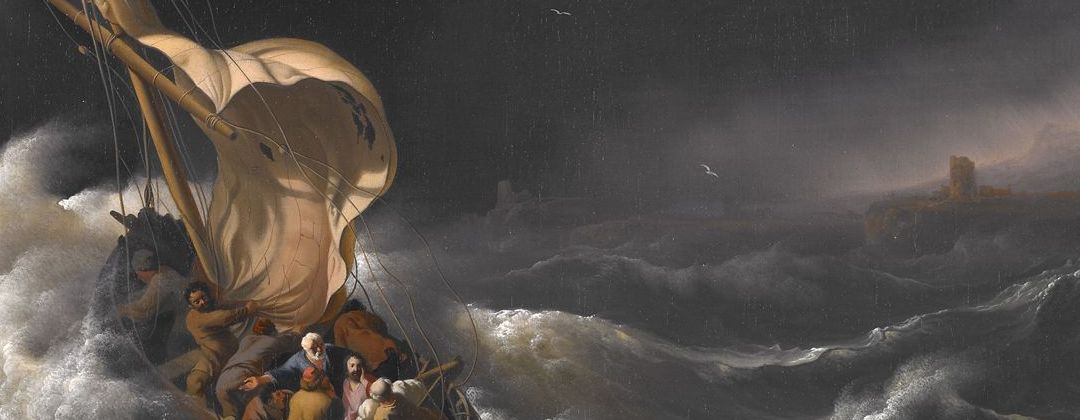
Is it just me, or has this been a rough decade? We’ve seen serious hurricane seasons return with a vengeance, giving us the likes of Katrina, Rita, Gustav, and Ike; we’ve seen the representatives of a virulent, malignant strain of Islam take terrorism to a whole new level, beginning with the 9/11 attack on America; along with that, we’ve seen the government of Iran actually get worse, which would have seemed hard to believe before we were introduced to Mahmoud Ahmadinejad, and the return of expansionist Russia; and now we’re seeing a storm of a different kind tear through our financial institutions, leaving us holding our collective breath to see which will stand and which will fall.And though it’s now receded into memory, we also saw the worst natural disaster in human history, the Asian tsunami of December 26th, 2004, which killed some 273,000 people. It seems strange to think that such a gargantuan event should be out of sight, out of mind, given the instantaneous response it provoked at the time; from children setting up tsunami-relief lemonade stands to Jay Leno selling a white Harley covered with celebrity signatures on eBay—a Houston company bought it for $810,000 to sit in the atrium of their headquarters—to offers of foreign aid from the U.S. government to large grants from Presbyterian Disaster Assistance and agencies of other denominations, people all across America snapped into action to offer assistance, and in that we only mimicked what the rest of the world was already doing. To be sure, there were also many who took advantage of the situation to line their own pockets, but on the whole, the collective response was one of which the human race could be proud.Of course, there was another response as well, from professional opinion-givers—pundits, authors, writers, Ph.D.s, preachers, and others of that sort—seeking to turn the situation to their rhetorical advantage; and in the West, at least, most such commentary revolved around religion. As Presbyterian pastor and writer Jim Berkley, who happens to be a friend of mine, noted with some exasperation, it seemed that the secular press had all of a sudden discovered the problem of evil—and assumed that the discovery was equally sudden for the church. The novelist and critic James Wood, writing in the Manchester Guardian that following January, wrote, “If there is a God with whom we can communicate, who (sometimes) hears our prayers, why does He not hear our suffering? Or why does He hear our suffering and do nothing about it? Theology has no answer, and never has had.” A few days before, Guardian columnist Martin Kettle had written a column titled “God and the Tsunami” which was, essentially, an 860-word elaboration of that same assumption, concluding with the question, “Are we too cowed now to even ask if the God can exist that can do such things?”It’s worth pointing out that there’s one important difference between Wood’s column and Kettle’s: Kettle seemed to think that atheist science provides a perfectly acceptable answer for the tsunami, while Wood understood that it doesn’t. As he noted, such an approach “can tell us how the world works, but cannot answer the eternal metaphysical wail: why do we suffer so?” Both, however, assumed that the tsunami justified them in their atheism, for surely Christianity can offer no worthwhile explanation.Unfortunately, as little as I like to admit it, the views on the tsunami offered by many Christians in the weeks after this disaster didn’t do much to challenge Kettle and Wood in their assumption. Why is it that every time something big and nasty happens, someone will inevitably jump up and pronounce it to be God’s judgment on the victims? It’s utterly beyond me. In Scripture, every time God is going to judge someone, he sends prophets before it happens, both to give them a chance to repent and to ensure that they recognize his judgment when it comes. I don’t recall there being any prophets predicting judgment on Asia, nor do I understand why some people are so quick to anoint themselves prophets of judgment after the fact; and if God hasn’t given you the gift of prophecy, that’s really not something you should be pronouncing on.Of course, that sort of “God is judging Asia” talk was far from the only reaction out there. Others, for example, seized on the relief efforts of Christian churches and organizations, and on the opportunity tsunami relief seemed to provide for missionaries and the indigenous church in countries such as Indonesia, Thailand and India, to proclaim that God allowed the tsunami in order to create these opportunities, as if the chance for people to give money justified even one death, let alone 273,000; and even if this does boost evangelistic efforts in Asia, couldn’t that have been accomplished without the loss of life? There is no doubt truth here, that God will bring good out of this calamity, but when it’s offered as an explanation, as a justification, for such pain and suffering . . . well, that strikes me as blasphemous and obscene.The issue here is one that the great journalist and wit H. L. Mencken identified when he wrote, “For every problem, there is a solution that is simple, easy to understand, and wrong”; and unfortunately, those are the sort of solutions, the sort of answers, to which we tend to gravitate. For Christians, it seems to boil down to, “God is good, therefore this must really be good in some way.” Obviously, atheists don’t have that particular issue, but even the Guardian’s tag team that I mentioned earlier show signs of this. For Martin Kettle, an atheist of a scientific bent, the tsunami allowed the easy dismissal of Christian claims and a relatively easy affirmation of an atheist scientific view, for science can explain it and religion can’t. James Wood, being a literary type, was able to see that the explanation science offers isn’t adequate to our needs, so he said, “This sort of event proves that we need literature to express our feelings”—as if that was any more adequate.The difficulty we have finding a satisfactory explanation for such an event as the tsunami, or the abuse of a child, or 9/11, or any of the other myriad ways in which human and natural evil devastate lives, should lead us to ask whether an explanation is really what we want. After all, let’s suppose that someone came along and offered an explanation of evil which really was sufficient, which really did explain everything in a satisfactory way, with no holes in it. What would be the cost of such an explanation? What would that mean? It would mean that evil is explainable, that it’s understandable; and for that to be the case, it would have to be part of the natural order, part of the necessary structure of the world as God made it. Put another way, for us to be able to offer an answer for why evil happens, evil would have to make sense, which would mean it would have to be in some way necessary to the proper order of things; which would mean that this world was flawed from the beginning, and that God deliberately created it flawed. It would mean that we would never be able to get away from evil, that evil cannot be defeated; it would mean that the people who say that good cannot exist without evil would be right, and thus that evil, too, is eternal. That, it seems to me, would be far too high a price to pay for any mere explanation.When once we see this, we realize that we could either have a world in which we can find a rational answer to the problem of evil, or we could have a world in which the final defeat and total destruction of evil is a possibility; and it is the consistent testimony of Scripture that the latter is the world we have. Scripture doesn’t offer any sort of philosophical explanation for evil, because it offers no compromise with evil at all, only unrelenting denunciation of evil in all its forms. Those who seek to explain why God would allow the tsunami should remember the words of Jesus in Luke 13 about another natural disaster, the collapse of a tower in Jerusalem, which killed 18 people; not only did he re­fuse to offer an explanation, he challenged the popular idea that their deaths were God’s judgment on them. Trying to make sense of evil is our project, not God’s, and thus it’s ultimately futile. Evil doesn’t make sense, it can’t be rationally explained, because it doesn’t belong to the world God made; it’s fundamentally alien to the way things are supposed to be, and so it’s fundamentally inexplicable.Does this mean that our faith has no answer to offer us for the problem of evil? Does this mean that God has no answer? No! Indeed, he offers us the only real answer possible: he offers us himself. Thus it is that when Habakkuk offers his complaint at the evil God allows, what is God’s response? “There is still a vision for the appointed time; it speaks of the end, and it does not lie. If it seems slow in coming, wait for it; it will surely come, it will not delay. . . . The righteous live by their faith.” The apostle Paul then picks this up in Romans 1, applying it to the gospel of Jesus Christ: it is through Jesus, by faith in Jesus, that the righteous live by faith. It is through faith in a God who doesn’t try to fob us off with explanations, as if such thin soup would really make our lives any easier or any better, but instead comes down to endure evil with us, and ultimately to defeat it by his death and resurrection.Thus, when James Wood asks, “Why does [God] not hear our suffering? Or why does He hear our suffering and do nothing about it?” he’s wrong in his question, and completely wrong to say, “Theology has no answer, and never has had,” because that’s exactly what Easter is about. God has heard our suffering—he has heard every cry of anguish, felt every blow and every betrayal, and caught every tear in the palm of his hand—and in Jesus Christ, he has done everything about it. In Jesus, he came down to share our suffering with us, drinking that cup to the very dregs. He took the weight of all our sin on his shoulders—the entirety of human evil and human suffering, of all the brokenness and wrongness of the world—and he carried it to the cross, its cruel thorns digging into his forehead, its sharp splinters shredding his back; and there, for the guilt of all the crimes he never committed, he died.This is God’s answer to evil. He doesn’t explain it, for to explain it would be to dignify it, to give a reason for it, and ultimately to excuse it, when evil is utterly inexcusable; instead, he says, “I have overcome it.” In the resurrection of Jesus, life has defeated death, and love has broken the power of sin, once and for all. Yes, there are still times when the pain of this world drives us to cry out with the Psalmist, “How long, O Lord?”; there are times when we wonder why God is waiting so long to raise the curtain. But we know that at the cross, he turned evil against itself, and on that first Easter, he broke it; and when the time is right, he will complete the victory he won that day. Evil will be banished, and all things will be made new; God will live among us, and he will wipe away every tear from our eyes, for death itself shall die, and grief and sorrow and pain will be no more. This is the promise, and the one who makes it is the beginning and the end, and all that he says is trustworthy and true.


God our keeper

I lift up my eyes to the hills. From where does my help come?
My help comes from the LORD, who made heaven and earth.
He will not let your foot be moved;he who keeps you will not slumber.
Behold, he who keeps Israel will neither slumber nor sleep.
The LORD is your keeper; the LORD is your shade on your right hand.
The sun shall not strike you by day,nor the moon by night.
The LORD will keep you from all evil; he will keep your life.
The LORD will keep your going out and your coming in
from this time forth and forevermore.
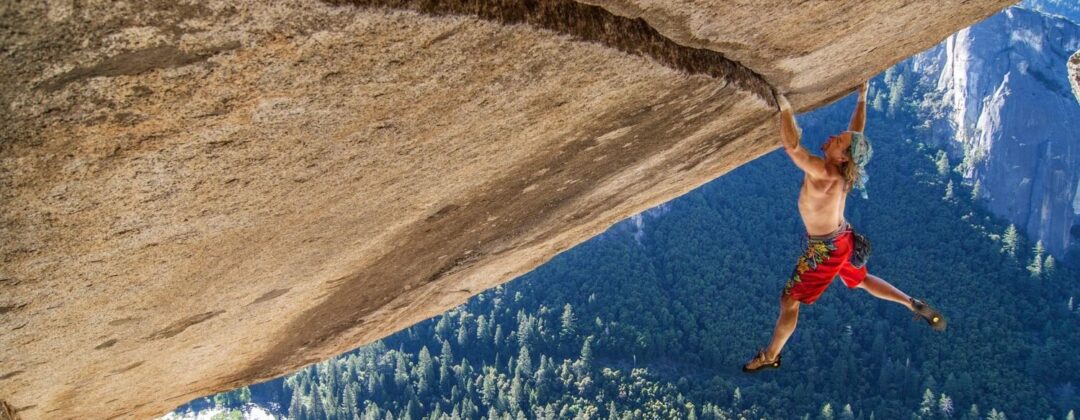
—Psalm 121 (ESV)Joyce over at tallgrassworship got me thinking about this psalm with her recent post; it’s one I’ve been particularly fond of ever since I was inspired by Eugene Peterson’s book A Long Obedience in the Same Direction: Discipleship in an Instant Society to preach through the Songs of Ascents (of which this is the second). It’s a psalm for travelers, and thus for all who are betwixt and between; and so I think Joyce is right that it’s one that’s particularly valuable for us to hear in this rather parlous period.The road is a perilous place. It has ever been thus; that’s why we pray for our snowbirds as they fly north for the summer and back south for the winter. Dangers both dramatic—such as the threat of terrorist attack—and mundane—perhaps an overly worn bolt gone unnoticed by an overworked, overtired mechanic—shadow us as we fly; driving, we bear the risks of mechanical failure, tire damage, and fellow drivers whose weariness, illness, chemical intake, poor reflexes, or simple incompetence make them unsafe behind the wheel. Wherever we go, by land, air, or sea, the weather is always a potential threat. Even in our age, travel has risks.Even in our age, yes; but it was far more so in the ancient world. To take but one example, ships crossing the Mediterranean bearing cargo typically would not sail around the southern coast of Greece. Instead, they would put in at the port of Corinth, or at Piraeus, the port of Athens, offload all their cargo, carry it across the Isthmus of Corinth, and load it on another ship on the other side to take it the rest of the way. This trade from ships unwilling to sail around Cape Malea and Cape Matapan, the southernmost points of Greece, was the reason Corinth was founded, and the reason for its wealth and power. Now, this was a pretty involved and labor-intensive evolution, but sailors of the time didn’t begrudge it, for their assessment of the treachery of the southern Greek coast was blunt: “Who sails around Malea best make out his will.” For what it’s worth, the captains and crew of today’s big ships apparently feel much the same way: if you go to Corinth now, you will find a canal cut through the isthmus—I’ve stood and looked down into it—full of ships and boats that don’t want to take the southern route.The hazards at sea, in that time of peace, were mostly those of wind and wave; on land, not only could bad weather be a problem, so could good weather—in the Mediterranean climate, sunstroke and heatstroke are very real dangers. The roads, aside from those built by the Romans, weren’t paved, so there was always the possibility of turning one’s ankle on a loose stone (or having one’s horse or donkey suffer similar injury); and for those on long journeys, the fatigue and anxiety of travel took their toll emotionally and could bring on a breakdown—what ancient writers called moonstroke, because they understood it to come from the effects of exposure to the moon. (That ancient idea is also at the root of our words “lunacy” and “lunatic.”) Finally, there was the greatest threat of all, from robbers who lurked along the road to ambush the unwary traveler.Now, this psalm may originally have been written simply to reassure the ordinary traveler; but its placement as the second of the Songs of Ascents, the psalms which were sung by pilgrims as they made their way up the road to Jerusalem to worship God at the temple, gives it a particular depth of meaning. As one of the Songs of Ascents, this psalm is talking about a very particular road: the road to the city of God; and that road, the way of pilgrimage, the path of discipleship, is often a perilous and difficult one indeed. It’s difficult because it requires us to leave the ways of the world behind, which we often don’t want to do, and because it calls us to stretch ourselves, to do and be more than we think ourselves capable of doing and being; it’s also difficult because the world doesn’t tend to treat people well who challenge its comfortable assumptions and ways of doing business. On this road, too, fatigue is a very real concern, as is the threat of attack from others; we need help if we’re going to make it through.The psalmist knows this, and so he lifts up his eyes to the hills, which is a deeply ambiguous act. On the one hand, it was from the hills that danger came, as robbers came down out of their hiding places to ambush travelers on the road. The hills were a source of danger, and a refuge for enemies. At the same time, if the hills the psalmist has in view are those which rise around Jerusalem (as seems likely), then these are not only hills among which robbers live—they are also the hills among which God lives; perhaps, then, we have the psalmist looking at the hills and straining not only to see if there are robbers ahead, but to see if perhaps he can catch his first glimpse of Jerusalem, the holy city, which is his goal. If this is so, then that movement of lifting up the eyes expresses both concern and trust: concern that the hills are the home of the enemy, but trust that God is also there.Thus to the question, “From where will my help come?” the answer comes quick and sure: “My help comes from the Lord, who made heaven and earth.” I look to the hills and I see danger, I see that I need help and protection, but I also see that my God, who made these hills and everything else, is there to give me the help and protection I need. This is the point the psalmist wants to make, and it’s one he makes in several different ways in this psalm, in the repetition of two key words. First is the repetition of “LORD,” which represents the personal name of God. (It’s translated this way because no Jew would ever pronounce the name of God for fear of violating the commandment against taking his name in vain. Thus, in reading the Scriptures, they would substitute the word Adonai, “Lord,” and our translations do the same thing.) In repeating the name of God—five times in these eight verses—the psalmist evokes, again and again, the work of God, both in creation (he is the one “who made heaven and earth”) and in taking care of Israel. We appeal, the psalmist tells us, to one whose power to help and bless his people is unlimited by anything at all, and whose will to do so has been proven over and over and over again.This is reinforced in the repetition of “keep” and “keeper,” which together occur six times. “The LORD,” the creator of the universe, the one who made everything just by speaking the word and who upholds everything that is, “is your keeper,” declares the psalmist; the LORD, who is so great and powerful that he holds all creation in the palm of his hand, is concerned about you, and watches over you. Whatever dangers may come, however great they may be, the LORD is there watching over you to guard and protect you. He will keep your foot from slipping; he will be your shade to protect you from the sun; he will guard you from the effects of the moon. “The LORD is your keeper.”Now, is this a promise that those who follow God will never suffer any affliction? Are we guaranteed never to stumble on the road, never to wear down under the demands of life, never to break down under the anxiety and fatigue we sometimes have to bear? Are we guaranteed never to be attacked, never to be robbed? No, clearly not; we know from our own lives and the lives of others that those who follow God are not exempt from the pain of the world, much though we might wish it were otherwise. The point isn’t that nothing will ever go wrong for us, or that we will never suffer—indeed, the New Testament is clear that those who walk with Jesus are sometimes called to suffer with him—but that whatever may come, we will never be defeated; evil may hurt us, but it will never have power over us or victory in our lives. Jesus didn’t tell the Pharisees that no one would ever harm his sheep, but he did say, “I give them eternal life, and they will never perish.” Similarly, Paul never told the Romans they would avoid “hardship, or distress, or persecution, or famine, or nakedness, or peril”—but he did declare that “in all these things, we are more than conquerors through him who loved us,” because nothing can or will ever separate us from his love.This is why the psalmist promises us, “The Lord will keep you from all evil; he will keep your life.” In every aspect of life, in all the things you do when you leave home in the morning, in every part of the home to which you return, the Lord is with you to guard and protect you; and though you may walk through the valley of the shadow of death, you need fear no evil, for he who has overcome the world is with you, and in him you too will overcome, for he will take care of you. This is what we know as the doctrine of providence, that in every circumstance, however difficult, God is at work to bring about our good. I love the way the Heidelberg Catechism puts this: “I trust [God] so much that I do not doubt he will provide whatever I need for body and soul, and he will turn to my good whatever adversity he sends me in this sad world. He is able to do this because he is almighty God; he desires to do this because he is a faithful Father.” This is the kind of trust we can have in God as our keeper.Still, trusting God isn’t always easy. Maybe you’ve never felt this way, but there have been times when I was praying and praying, and he just didn’t seem to be paying attention; it’s enough to make you wonder, sometimes, if God’s just on another frequency for a while, maybe listening to the ballgame or something. Against this, the psalmist says, no, “he who keeps you will not slumber. He who keeps Israel will neither slumber nor sleep.” God’s mind never wanders; he never drops off for a nap, nor does he ever get so busy taking care of the rest of the world that he forgets about you. Yes, there are times when troubles come, and yes, we often wonder why God lets them hang around so long, but even then, he is with us, watching over us and taking care of us; he doesn’t keep us out of the dark times, but he promises to bring us through them. I think the great Catholic mystic Julian of Norwich captured it best when she wrote, “God did not say, ‘You will not be troubled, you will not be belabored, you will not be disquieted’; but God said, ‘You will not be overcome.’”This is the promise of Scripture, which we see in this psalm, in Jesus’ words in John 10, and in many other places: “You will not be overcome.” The way of discipleship isn’t easy, because it calls us to turn our backs on a world which is opposed to God and set our face toward his holy city, to live our lives as a pilgrimage toward God. There will be times when our feet slip and we slide off the path into sin, leaving us wondering if we can even get back on our feet; there will be times when we grow weary on the way, and fatigue seems to be too much for us; there will be times when we’re just getting hammered emotionally. But in these times, and in all the greater and lesser difficulties we face as we seek to follow Christ in this life, the psalmist assures us, “The Lord is your keeper; . . . The Lord will keep your going out and your coming in from this time on and forevermore.” Through the hard times and the easy times, in big problems and little ones, in all the daily trials and tribulations of life, however important or unimportant they might seem, he is our keeper; and he keeps us not just from up ahead or up above, but from right beside us, where he walks to protect us, and to lead us on.